
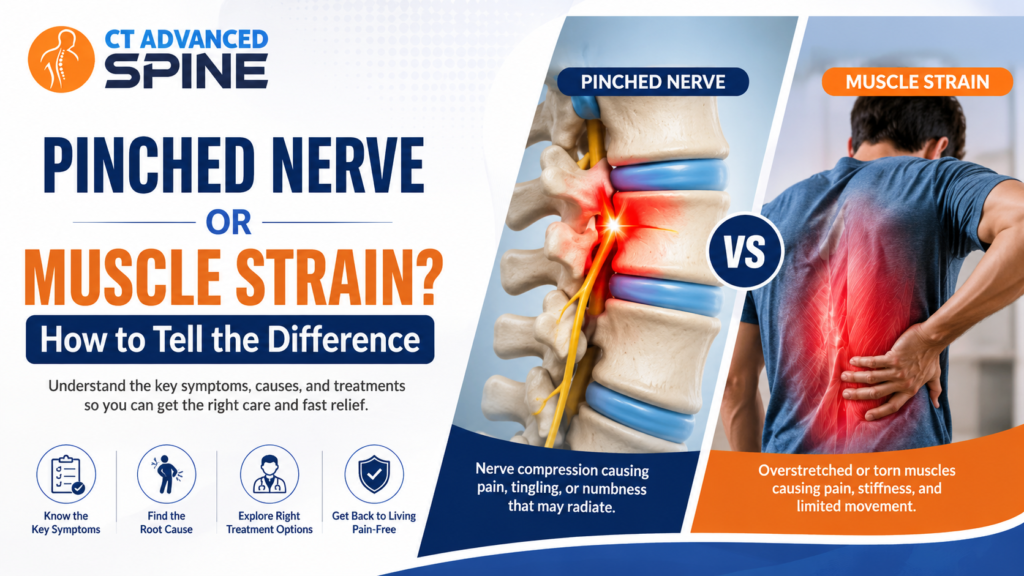
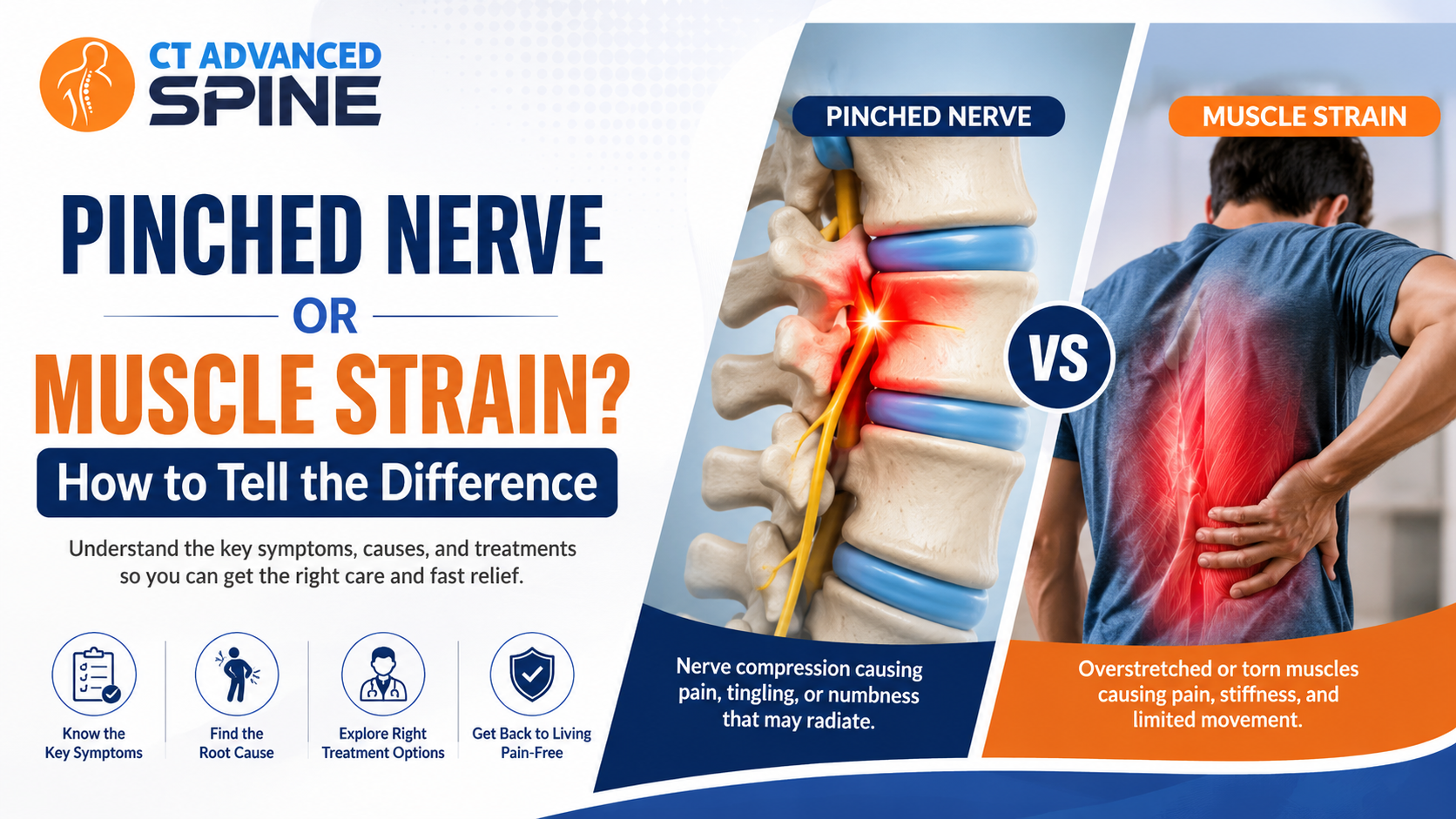
You’ve got pain. Maybe it started after yard work, or you woke up with it, or it crept in over a few days. Now you’re here, trying to figure out if it’s a pinched nerve or muscle strain — because the internet’s given you twelve possible diagnoses and you’re more confused than when you started.
Here’s the thing: most people get this wrong. They assume sharp pain means nerve damage and dull pain means muscle. Or they think radiating pain always means a pinched nerve. Neither’s quite right. At Connecticut Advanced Spine, we see patients every week who’ve been treating the wrong problem for months because they misread the signs.
Dr. Ashish Upadhyay, our board-certified orthopedic and spine surgeon, has built his practice around helping Bristol residents get past the guesswork and find real answers.
This isn’t about scaring you. It’s about giving you the tools to recognize what’s actually happening in your body so you can stop wasting time on treatments that don’t match the problem. We’ll walk through the myths people believe, the patterns that actually matter, and when you need to stop Googling and pick up the phone.

Myth 1: Sharp Pain Always Means a Pinched Nerve
People hear “sharp pain” and immediately think nerve. Makes sense, right? Nerves send signals, so nerve pain should feel electric and intense.
Not always.
Muscle strains can absolutely cause sharp pain, especially in the first 24 to 48 hours after the injury. You turn wrong, lift something awkward, or sleep in a bad position, and suddenly you’ve got a stabbing sensation in your neck or lower back. That’s your muscle fibres protesting. The pain’s sharp because the tissue’s inflamed and every movement pulls on damaged fibres.
A pinched nerve, on the other hand, doesn’t always feel sharp at first. Sometimes it starts as a dull ache or a strange tingling sensation. The sharp, electric quality often comes later — when the nerve’s been compressed long enough that it starts firing off distress signals. That’s when you get the classic “lightning bolt” feeling that shoots down your arm or leg.
Here’s what actually separates them: location and behaviour. Muscle strain pain stays put. It hurts where the muscle is. You can usually press on the spot and recreate the pain. A pinched nerve?
That pain travels. It follows the nerve’s path. If you’ve got a compressed nerve root in your lower back, you might feel it in your buttock, down the back of your thigh, even into your calf or foot. That’s radiating pain, and it’s the signature of nerve involvement.
We treated a patient last year — a contractor from Bristol — who’d been icing his shoulder for weeks thinking he’d strained it. The pain was sharp, showed up after a long weekend of overhead work, and he could point right to the spot.
Classic muscle strain presentation. Except the pain kept shooting down his arm into his thumb and index finger. That’s not what muscle strains do. Turned out he had a cervical nerve root compression at C6. Once we addressed the nerve, the “muscle pain” disappeared.
Myth 2: If You Can Still Move It, It’s Not Serious
This one gets people into trouble. They figure if they can push through the pain and keep working, it’s just a minor strain. Rest a few days, pop some ibuprofen, back to normal.
Sometimes that’s true. But sometimes you’re masking a pinched nerve that’s getting worse while you ignore it.
Muscle strains do tend to limit your range of motion right away. You pull a muscle in your lower back and bending forward becomes impossible. The muscle’s protecting itself — it tightens up to prevent further damage. You feel stiff, locked up, and movement makes it worse. That’s your body’s way of telling you to stop.
Pinched nerves are sneakier. In the early stages, you might not lose much range of motion at all. You can still bend, twist, lift. The pain’s there, maybe some tingling or numbness, but functionally you’re fine. That’s the trap. Because nerve compression doesn’t always scream at you like a torn muscle does. It whispers. And while you’re ignoring it, the nerve’s getting more compressed, more inflamed, and eventually it stops working properly.
That’s when you get muscle weakness. Not pain-related weakness where you can’t lift something because it hurts too much. Actual weakness. Your foot starts dragging a little when you walk. You can’t grip things as firmly. Your leg feels unstable going down stairs. Those are signs the nerve’s been compressed long enough that it’s affecting motor function. At that point, you’re not dealing with something that’ll heal on its own in a week.
The muscle weakness piece is critical. Muscle strains don’t cause weakness unless you’re actively in so much pain you can’t contract the muscle. Once the initial pain settles, your strength comes back. Pinched nerve weakness? That sticks around until you fix the compression. We’ve seen patients at Connecticut Advanced Spine who waited months, thinking their “weak leg” was just deconditioning. It wasn’t. They had spinal stenosis pinching the nerve root, and no amount of strengthening exercises was going to fix it until we addressed the stenosis itself.
Myth 3: Tingling and Numbness Always Mean Nerve Damage
Everyone knows tingling means nerves, right? If your leg’s numb or your fingers are buzzing, it’s got to be a pinched nerve.
Usually, yes. But not always.
Severe muscle spasms can create enough pressure on nearby nerves to cause temporary tingling or numbness. Your muscle’s so tight it’s compressing the nerve that runs alongside it. The sensation’s real, but the root cause is muscular, not neural. Once the spasm releases, the tingling goes away. That’s very different from a structurally compressed nerve where the numbness persists even when you’re resting and the muscle’s relaxed.
Here’s how to tell: pattern and duration. Muscle-related tingling is inconsistent. It comes and goes depending on your position or activity. You sit a certain way and your leg tingles. You shift, it stops. Pinched nerve numbness is more constant. It’s there when you wake up. It’s there when you’re lying flat. It might get worse with certain movements, but it doesn’t fully disappear just because you changed positions.
And then there’s the distribution. Muscle strain tingling usually affects a broad area — your whole calf feels weird, or your entire forearm. Pinched nerve numbness follows a specific dermatome, which is the strip of skin served by a single nerve root. If you’ve got numbness just on the outside of your foot and your pinky toe, that’s the S1 nerve root. If it’s the top of your foot and big toe, that’s L5. That kind of precision doesn’t happen with muscle issues.
We had a patient last fall who came in convinced she had sciatica. She had numbness down her left leg, couldn’t sit through a meal without her leg “falling asleep,” and assumed it was her spine. Dr. Upadhyay examined her and found severe piriformis spasm. The muscle was so tight it was compressing her sciatic nerve as it passed through the buttock. Not a herniated disc. Not spinal stenosis. Just an angry muscle pinching the nerve externally. We treated the muscle spasm with injections and physical therapy, and her “sciatica” resolved in three weeks. Had she gone straight to surgery somewhere else, she’d have had an unnecessary procedure.
That said, if your numbness is constant, follows a clear nerve path, and doesn’t improve when the muscle relaxes, don’t wait. That’s a pinched nerve, and the longer it’s compressed, the harder it is to reverse the damage.
Myth 4: Rest Is Always the Right First Move
“Just rest it” is the default advice for any musculoskeletal pain. And for acute muscle strains, it’s often correct. You strain a muscle, you need to give it time to heal. Ice it, rest it, avoid aggravating activities for a few days.
But rest doesn’t fix a pinched nerve. In fact, sometimes it makes it worse.
If you’ve got a nerve compressed by a herniated disc or bone spur, lying in bed doesn’t decompress it. The mechanical pressure is still there. Rest might reduce inflammation temporarily, which can ease symptoms, but it’s not addressing the root cause. And if you rest too long, you risk deconditioning the muscles that support your spine, which can make the problem worse when you finally do get moving again.
Here’s the nuance most people miss: movement type matters more than movement amount. Certain positions and activities decompress nerves. Others compress them further. If you’ve got a pinched nerve in your neck, extending your head backward usually makes it worse. Flexing forward might relieve it. If it’s a lumbar nerve root, sitting often makes it worse, while standing or lying with your knees bent might ease it. The right movement can help. Random rest might not.
That’s why we emphasize activity modification, not complete rest. For muscle strains at Connecticut Advanced Spine, we tell patients to avoid the movement that caused the injury but keep moving in ways that don’t hurt. For pinched nerves, we identify which positions and activities decompress the nerve and build a plan around those.
The failure point happens when people rest for weeks, see no improvement, and still don’t seek care. A muscle strain that isn’t better after two weeks of rest probably isn’t just a muscle strain. A pinched nerve that’s causing progressive numbness or weakness isn’t something you can rest your way out of. That’s when you need imaging and a real diagnosis.
How to Actually Tell the Difference
Forget the myths. Here’s what to look for when you’re trying to figure out pinched nerve vs muscle strain.
Location of pain. Muscle strain pain is local. You can point to it. It’s in the muscle belly, and pressing on it recreates the discomfort. Pinched nerve pain travels. It starts in one place — your neck or lower back — but shoots somewhere else. Down your arm. Into your leg. That radiation is your biggest clue.
Quality of pain. Muscle strains tend to produce a dull, achy, sometimes throbbing pain. It gets worse with movement and better with rest. Pinched nerves produce sharper, burning, or electric sensations. Some people describe it as “hot” or “shooting.” The pain doesn’t always correlate with movement the way muscle pain does. You can be sitting still and get a jolt.
Associated symptoms. Tingling, numbness, muscle weakness — these point to nerve involvement. Muscle strains don’t cause true paresthesia. If your foot’s numb or your hand’s tingling, you’re dealing with a nerve. Muscle issues might make you feel tight, stiff, or sore, but they don’t create those electrical sensations.
Response to treatment. This one takes a few days to assess, but it’s telling. Muscle strains improve with rest, ice, and anti-inflammatory meds. Not completely, but noticeably. Pinched nerves don’t respond as predictably. Ice might help inflammation, but if the structural compression’s still there, the symptoms keep coming back. If you’ve been icing and resting for a week and you’re no better — or you’re worse — think nerve.
Onset. Muscle strains usually have a clear mechanism of injury. You lifted something, you twisted wrong, you exercised harder than usual. Pinched nerves can start that way, but often they come on gradually. You didn’t do anything specific, but over days or weeks the pain’s gotten worse. That slow progression suggests degenerative changes like a herniated disc or spinal stenosis, not an acute muscle tear.

When to Stop Guessing and Get Help
You don’t need to see a spine specialist for every ache. Most muscle strains resolve in a week or two with basic care. But there’s a point where guessing becomes risky.
If your pain’s been present for more than two weeks and it’s not improving, that’s your line. Two weeks is enough time for a simple muscle strain to show significant progress. If you’re still hurting at the same intensity, something else is going on. Could be a pinched nerve. Could be a more severe muscle or ligament injury. Either way, it’s time for imaging and a proper diagnosis.
If you’ve got progressive numbness or weakness, don’t wait two weeks. See someone now. Those symptoms mean the nerve’s under enough pressure that it’s starting to fail. The longer it stays compressed, the less likely it is to fully recover, even after treatment. Nerve damage can become permanent if it’s ignored long enough. We’ve had patients at Connecticut Advanced Spine come in after six months of weakness thinking it was no big deal. By that point, some of the nerve function couldn’t be restored. That’s avoidable if you catch it early.
Loss of bowel or bladder control is an emergency. If you’ve got back pain or leg pain and you suddenly can’t control your bladder, or you lose sensation in your groin or rectum, you need to go to the ER. That’s a condition called cauda equina syndrome, and it requires immediate surgery to prevent permanent damage. It’s rare, but it happens, and it doesn’t wait for you to finish reading articles online.
If your pain’s interfering with your daily life — you can’t work, you can’t sleep, you can’t sit through a meal — that’s also a sign to get help. Pain that severe isn’t something you tough out. It’s your body telling you something’s wrong, and ignoring it doesn’t make you resilient. It just delays the solution.
Dr. Upadhyay trained specifically in spine care because he saw too many patients suffering longer than they needed to. He came back to Bristol to give this community access to the kind of specialized, personalized care that addresses the root cause, not just the symptoms. Whether it’s a herniated disc, spinal stenosis, or a stubborn muscle issue that needs targeted treatment, we’ve built our practice around figuring out what’s actually wrong and fixing it.
What Happens If You Treat the Wrong One
Treating a muscle strain like a pinched nerve isn’t the end of the world. You might waste time on treatments that don’t help, but you’re probably not making things worse. You’ll try physical therapy, maybe some stretches, and eventually the muscle heals on its own.
Treating a pinched nerve like a muscle strain? That’s where things go sideways.
If you’ve got a compressed nerve and you keep pushing through with activity, you risk making the compression worse. That herniated disc that’s already bulging into your nerve root? Repeated bending and lifting can push it further out. That spinal stenosis that’s borderline? Ignoring it while it progresses means more nerve damage, more pain, and eventually a bigger intervention than you would’ve needed if you’d caught it early.
We see this constantly. Someone comes in after months of self-treating what they thought was a back strain. They’ve done yoga, massage, chiropractic adjustments, acupuncture. Some of it helped a little. None of it fixed it. By the time they get imaging, the disc herniation’s severe or the stenosis is advanced. Now instead of a simple epidural injection or a course of targeted physical therapy, they’re looking at surgery.
That’s not to scare you into thinking every back pain is a surgical emergency. Most isn’t. But it’s to make the point that accurate diagnosis matters. The right treatment at the right time can resolve a problem before it becomes a bigger one. The wrong treatment just buys time for the real issue to get worse.

How Connecticut Advanced Spine Approaches This
We don’t guess. That’s the short version.
When you come in with pain, we start with a detailed history. What exactly hurts? When did it start? What makes it better or worse? Can you point to the spot, or does it travel? Those answers give us half the diagnosis before we even examine you.
Then we do a physical exam that’s designed to differentiate pinched nerve vs muscle strain. We test your reflexes, your muscle strength, your sensation in specific dermatomes. We have you do movements that load the spine in different ways to see what reproduces your pain. A straight leg raise that shoots pain down your leg? That’s a nerve tension sign. Pain only when we press directly on the paraspinal muscle? That’s muscular.
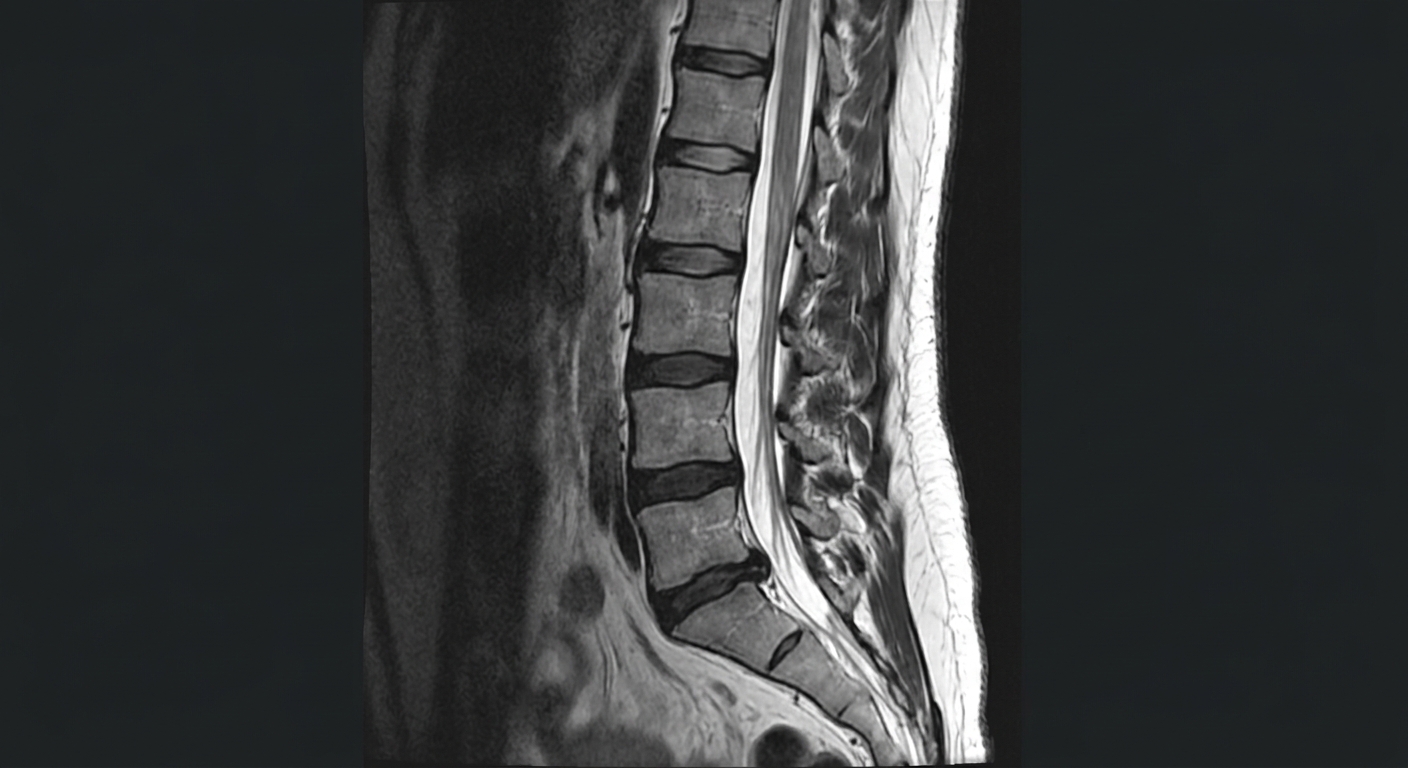
If the exam suggests nerve involvement, we order imaging. An MRI shows us the discs, the nerve roots, any stenosis or herniation. X-rays show us alignment and any bone spurs that might be compressing nerves. We’re not treating based on assumptions. We’re treating based on what’s actually there.
And then we match the treatment to the problem. If it’s a muscle strain, we focus on reducing inflammation, restoring range of motion, and strengthening the supporting muscles. If it’s a pinched nerve, we address the compression. That might mean epidural injections to reduce inflammation around the nerve root. It might mean physical therapy focused on decompression techniques. In some cases, it means surgery to remove the herniated disc material or widen the spinal canal.
Dr. Upadhyay’s fellowship training in spine surgery means we can offer the full spectrum of care, from conservative management to minimally invasive surgical techniques. But surgery’s never the first option. We exhaust every reasonable conservative treatment first. When surgery is necessary, we use techniques that minimize tissue damage, speed recovery, and get you back to your life faster than traditional open procedures.
What we don’t do is send you home with generic advice to rest and hope it gets better. That’s not how you treat spine and nerve problems. You need a specific diagnosis and a specific plan. That’s what we do here in Bristol.
Frequently Asked Questions
Can a pinched nerve feel like a dull ache instead of sharp pain?
Yes. Pinched nerves don’t always cause electric or shooting pain, especially in the early stages. Some people describe it as a deep, constant ache that doesn’t go away with rest. The key difference is that even when the pain’s dull, it usually radiates beyond the injury site and often comes with tingling or numbness.
How long does a muscle strain take to heal compared to a pinched nerve?
Most muscle strains improve significantly within one to two weeks with rest and basic care. A pinched nerve’s timeline depends on the cause and severity. Mild nerve irritation might resolve in a few weeks with treatment. More severe compression, like from a herniated disc, can take months or may require intervention if conservative care doesn’t work.
Can a muscle strain cause shooting pain down my leg?
Not typically. Shooting pain that travels down your leg almost always indicates nerve involvement, usually from the lumbar spine. Muscle strains cause localized pain that might refer slightly to nearby areas, but they don’t create the kind of radiating pain that follows a nerve distribution down to your foot.
Is it possible to have both a pinched nerve and a muscle strain at the same time?
Absolutely. In fact, it’s common. A herniated disc can pinch a nerve while also causing the surrounding muscles to spasm protectively. Both issues need to be addressed, but the nerve compression is usually the primary problem. Treating the nerve often resolves the muscle spasm naturally.
Get a Real Answer, Not Another Google Search
You can keep reading articles and trying to self-diagnose. Or you can come in and find out what’s actually wrong.
If you’re in Bristol or anywhere in central Connecticut and you’re dealing with pain that won’t quit, numbness that’s getting worse, or weakness that’s limiting what you can do, Connecticut Advanced Spine is here to help. Dr. Ashish Upadhyay and our team specialize in exactly this — figuring out whether it’s a pinched nerve, a muscle strain, or something else entirely, and then building a treatment plan that actually solves the problem.
We’re located on Middle Street in Bristol. Call us to schedule an evaluation. We’ll get you in, get you assessed, and get you moving in the right direction. No guessing. No generic advice. Just real answers and real treatment.
You don’t have to live with this. Let’s figure it out together.