
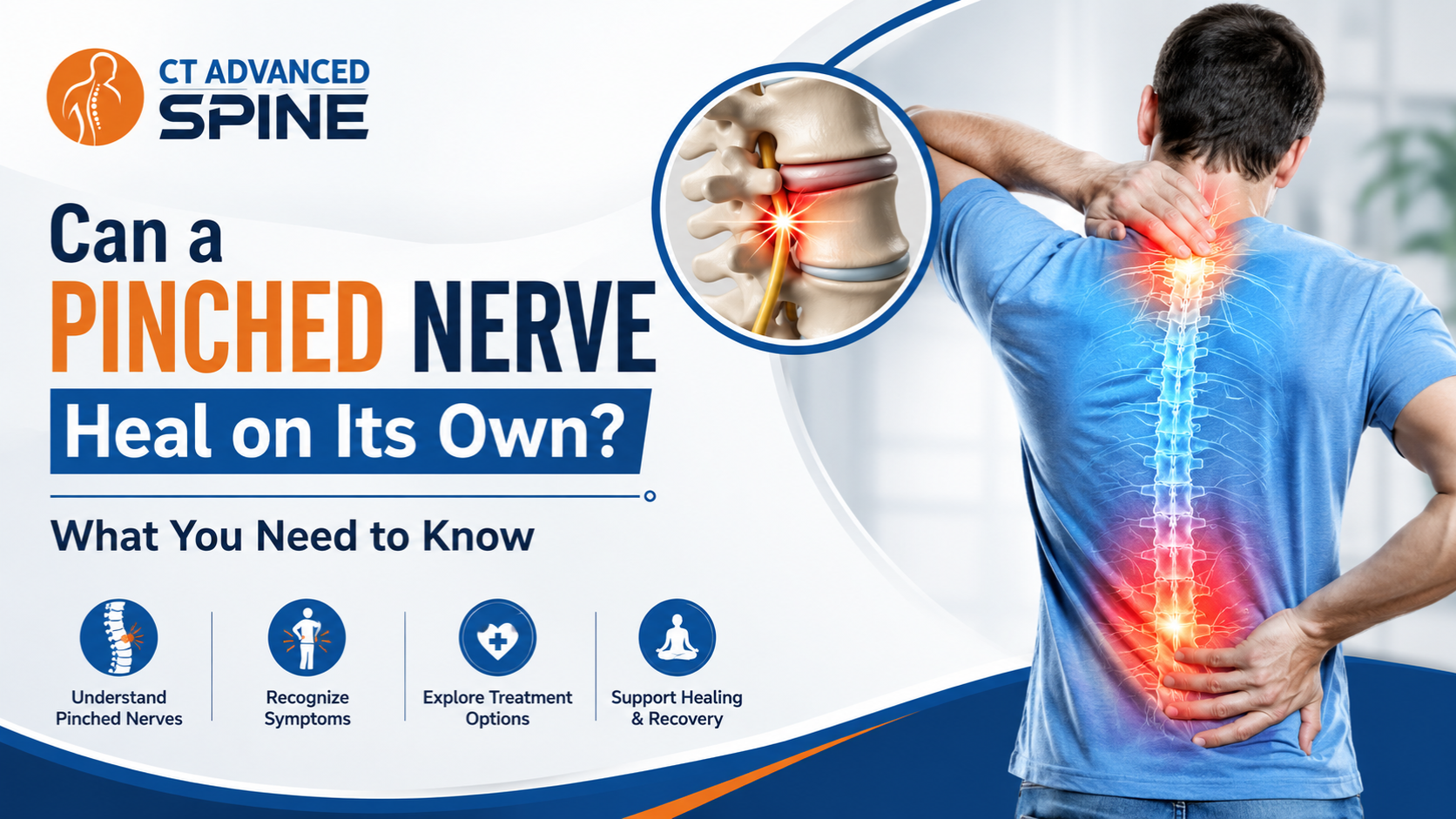
A patient walked into our Bristol clinic last month convinced she needed surgery. Her left arm had been tingling for three weeks. She couldn’t sleep on that side. Typing at work had become excruciating. She’d read enough online to diagnose herself with a herniated disc and came prepared for the worst.
We examined her. Ran some tests. Asked about her recent routine changes.
Turns out she’d started working from her couch during a kitchen renovation. Three weeks of hunching over a laptop perched on cushions. No herniated disc. Just a pinched nerve in her neck from sustained poor posture.
We sent her home with specific stretches and positioning guidelines. No injections. No surgery. Two weeks later, the tingling was gone.
Here’s the thing: not every pinched nerve needs medical intervention. Many do heal on their own. But “many” isn’t “all,” and knowing the difference matters more than you’d think.
I’m Dr. Ashish Upadhyay, and I’ve treated hundreds of pinched nerve heal at Connecticut Advanced Spine in Bristol. Some resolved with rest and stretches. Others needed more aggressive treatment. This article unpacks when your body can handle the healing itself and when you need professional help.
What Actually Happens When a Nerve Gets Pinched
A pinched nerve isn’t really “pinched” the way you’d pinch fabric between your fingers. It’s compressed. Squeezed by surrounding tissue — bone, cartilage, muscle, or tendon — applying pressure where it shouldn’t.
That pressure disrupts normal nerve function. The nerve can’t transmit signals properly. You feel tingling, numbness, weakness, or pain radiating along the nerve pathway. Your brain gets garbled messages about what’s happening in that part of your body.
Most pinched nerves in the spine happen in two spots: the cervical spine (neck) and the lumbar spine (lower back). Cervical nerve compression sends symptoms into your shoulders, arms, and hands. Lumbar compression affects your hips, legs, and feet. That leg pain, numbness, or weakness people call sciatica? Often a pinched nerve in the lower back putting pressure on the sciatic nerve.
The compression can happen gradually or suddenly. Repetitive motions create slow inflammation that eventually squeezes the nerve. A herniated disc can bulge out overnight and press against a nerve root. Bone spurs from osteoporosis or arthritis narrow the space where nerves exit the spine. Spinal stenosis — the narrowing of the spinal canal — can trap multiple nerves at once.
Your body doesn’t ignore this problem. It responds with inflammation, trying to protect and heal the area. Unfortunately, that inflammation often makes the compression worse before it gets better. The swelling takes up space. More pressure. More pain.
Can Pinched Nerve Heal on Its Own? The Honest Answer
Yes. Mild pinched nerves often heal on their own.
But that answer needs context.
When we say “mild,” we mean the compression is minimal, the surrounding tissue isn’t severely damaged, and you’re capable of removing or reducing whatever caused the pinching. If you stop the aggravating activity, reduce inflammation with rest and ice, and give the nerve space to recover, your body usually handles it.
The research backs this up. According to multiple medical sources, mild pinched nerves typically improve with conservative at-home care — rest, gentle stretching, over-the-counter anti-inflammatory medication, and avoiding movements that trigger pain. Most of these cases show significant improvement within a few weeks.
I’ve watched this happen dozens of times at Connecticut Advanced Spine. Someone comes in with radiating arm pain from typing with their wrists bent at extreme angles. We correct their ergonomics, teach them nerve gliding exercises, and the symptoms fade over two to three weeks. No injections. No surgery.
But here’s where it gets tricky.
“Mild” is subjective until you know what’s causing the compression. You can’t see the nerve. You don’t know if that tingling in your fingers is from a slightly inflamed muscle pressing on a nerve or a herniated disc fragment that won’t shift without intervention.
Self-diagnosis fails more often than it succeeds. The patient who came in expecting surgery actually had a mild case. I’ve also seen the opposite — people who waited six months assuming their pinched nerve would heal on its own, only to discover they’d been walking around with spinal stenosis that had caused permanent nerve damage.
The source of your nerve compression determines whether healing happens naturally. Temporary muscle inflammation pressing on a nerve? Usually resolves. A bone spur from degenerative arthritis? That’s not going anywhere without treatment.

How Long Does Pinched Nerve Recovery Take
Most mild pinched nerves start improving within a few days to two weeks if you’re doing the right things. Complete resolution can take four to six weeks.
That timeline assumes you’ve actually removed the cause of the compression. If you rest your neck for a week but then return to the same terrible desk setup that caused the problem, you’re not recovering — you’re cycling.
Moderate pinched nerve cases can take two to three months. These involve more significant inflammation, possibly some structural issues like a small disc bulge, but still respond to conservative treatment. Physical therapy, targeted exercises, anti-inflammatory medication, possibly a short course of oral steroids.
Severe cases don’t follow predictable timelines because they usually need medical intervention. If a herniated disc fragment is pressing hard against a nerve root, time alone won’t move it. Spinal stenosis won’t reverse itself. You’re looking at spinal injections, minimally-invasive procedures, or surgery, and recovery depends on the specific treatment.
I tell patients at Connecticut Advanced Spine to watch for improvement markers, not calendar dates. Are you sleeping better? Can you sit longer without pain? Is the tingling less frequent or less intense? Those matter more than hitting some arbitrary two-week mark.
If your symptoms aren’t improving at all after two weeks of genuine rest and conservative care, that’s your signal. The pinched nerve isn’t healing on its own. Something more is going on.
Warning Signs That Your Pinched Nerve Needs Medical Attention
Some symptoms mean stop waiting and call a spine specialist.
Progressive weakness is the big one. If your grip strength is declining, if you’re dropping things, if standing from a chair is getting harder — that’s not normal pinched nerve recovery. That’s a nerve under enough sustained pressure that it’s losing function. Permanent nerve damage becomes a real risk if you ignore this.
Bowel or bladder dysfunction is a medical emergency. Sudden loss of bladder control, inability to urinate, or numbness in the saddle area (the region that would touch a bike seat) indicates cauda equina syndrome. This requires immediate surgical intervention. It’s rare, but when it happens, hours matter.
Symptoms in both legs or both arms suggest more serious spinal compression than a typical pinched nerve. This might be central spinal stenosis or a significant disc herniation affecting multiple nerve roots.
Pain that worsens despite rest and conservative care is another red flag. Pinched nerve pain should gradually improve once you remove the aggravating factor and reduce inflammation. If it’s getting worse, the underlying cause likely isn’t something that will resolve on its own.
Severe pain that makes sleep impossible or prevents basic daily activities doesn’t require a wait-and-see approach. Yes, pinched nerves hurt. But if you can’t find any position that provides relief, if over-the-counter medication doesn’t touch it, if you’re up all night because lying down intensifies the pain — see a spine specialist. That level of pain often indicates significant nerve compression that needs intervention.
I had a patient last year who waited three months before coming to our Bristol clinic. He assumed his leg weakness was temporary. By the time we saw him, he had foot drop — he couldn’t lift his foot properly when walking. We treated him successfully with a minimally-invasive procedure, but he’d developed some permanent weakness that earlier intervention might have prevented.
Don’t wait for permanent damage. The window where a pinched nerve heals on its own is real, but it’s not infinite.

What You Can Do at Home to Help Healing
Rest doesn’t mean bed rest. It means avoiding the specific activities that aggravate the nerve. If overhead reaching triggers shoulder pain and arm tingling, stop reaching overhead. If sitting worsens lower back and leg pain, take frequent standing breaks.
Complete inactivity often makes things worse. Muscles stiffen. Inflammation pools. Gentle movement keeps blood flowing to the area, which supports healing.
Ice and heat serve different purposes. Ice reduces acute inflammation and numbs pain. Apply it for 15 to 20 minutes at a time during the first 48 to 72 hours after symptoms start. Heat relaxes tight muscles and improves blood flow. Use it after the initial inflammation settles.
Over-the-counter anti-inflammatory medication — ibuprofen or naproxen — can reduce the swelling pressing on the nerve. Follow package dosing instructions. Don’t exceed recommended amounts thinking more will work faster.
Gentle stretching helps if done correctly. The key word is gentle. Aggressive stretching can irritate an already inflamed nerve. Nerve gliding exercises, which involve slowly moving the affected limb through positions that gently mobilize the nerve, often work better than static stretches. A physical therapist can teach you the right movements for your specific symptoms.
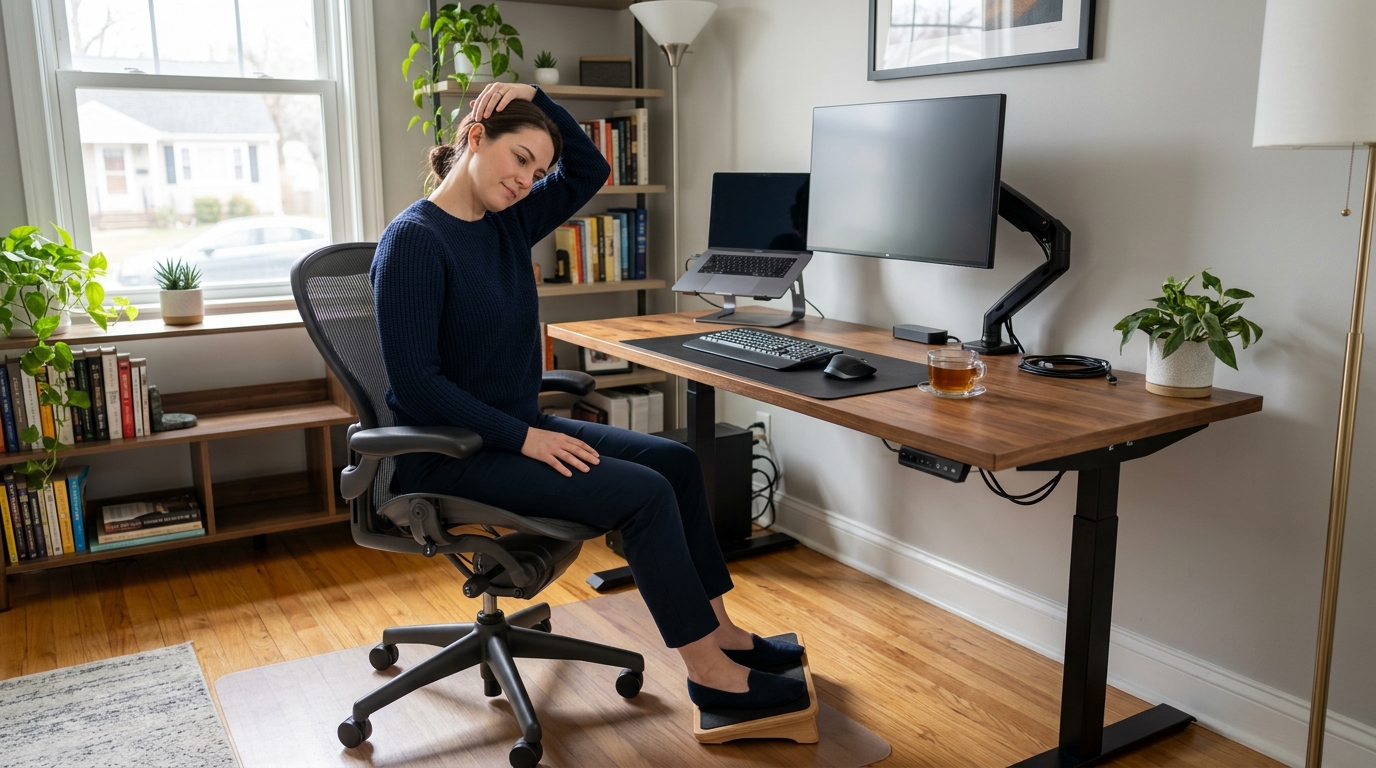
Posture correction matters more than most people realize. Slouching compresses spinal structures. Forward head posture (the position your neck assumes when staring at a phone) increases pressure on cervical nerves. Simple positioning changes throughout the day can reduce nerve compression significantly.
Sleeping position plays a role too. If you have a pinched nerve in your neck, sleeping on your back or side with proper pillow support keeps your spine aligned. For lower back pinched nerves, sleeping on your side with a pillow between your knees reduces pressure on lumbar nerves.
At Connecticut Advanced Spine, we see a clear pattern: patients who actively manage their symptoms with smart activity modification and targeted home care improve faster than those who just wait passively for the pain to stop.
When Conservative Treatment Isn’t Enough
Sometimes you do everything right and the pinched nerve doesn’t improve. That’s when professional treatment enters the picture.
Physical therapy provides more sophisticated approaches than home stretching. A physical therapist can perform manual therapy techniques, teach you specific nerve mobilization exercises, and identify movement patterns that perpetuate the problem. Most respond well to six to eight weeks of structured physical therapy if the underlying compression isn’t severe.
Oral steroids reduce inflammation more aggressively than over-the-counter medication. A short course — usually a week-long taper — can shrink the swelling around a compressed nerve enough to relieve symptoms. We use this at Connecticut Advanced Spine for patients whose symptoms are moderate but not severe enough for injections.
Spinal injections deliver anti-inflammatory medication directly to the compressed nerve. An epidural steroid injection places medication in the epidural space around the spinal cord and nerve roots. This provides more targeted relief than oral medication and can break the pain cycle long enough for healing to occur. The effects vary — some patients get months of relief, others a few weeks — but it’s a valuable diagnostic and therapeutic tool.
Minimally-invasive spine surgery becomes the discussion when conservative treatments fail and imaging shows a structural problem that won’t resolve on its own. A herniated disc fragment pressing on a nerve might need removal. Bone spurs from spinal stenosis might require decompression. Modern techniques allow us to address these issues through small incisions with faster recovery times than traditional open surgery.
I’m fellowship-trained in spine surgery, but I’m also honest about when surgery isn’t necessary. Most pinched nerve cases never reach my operating room. They get better with time and conservative care. But for those that don’t, having access to advanced treatment options prevents permanent nerve damage and gives people their lives back.

What Causes Pinched Nerves and How to Prevent Them
Herniated discs are the classic culprit. The gel-like center of a spinal disc pushes through a crack in the outer layer and presses against a nearby nerve. This can happen from age-related wear, sudden heavy lifting, or repetitive bending and twisting.
Spinal stenosis — the narrowing of spaces in your spine — compresses nerves as the spinal canal or neural foramina (the openings where nerves exit) become smaller. Arthritis, thickened ligaments, and bone spurs from osteoporosis contribute to this narrowing. It’s more common as you age.
Degenerative disc disease causes discs to lose height and cushioning ability. As discs flatten, vertebrae move closer together, and the openings where nerves exit the spine narrow. Less space means more chance of nerve compression.
Repetitive motion injuries affect people whose jobs or hobbies involve the same movements repeatedly. Assembly line workers. Hairdressers. Musicians. Tennis players. The constant stress inflames tissues and creates scarring that can trap nerves.
Poor posture might be the most preventable cause. That forward head position from looking down at screens all day? It loads your cervical spine with extra forces that compress nerves over time. Slouching while sitting increases pressure on lumbar discs.
Excess body weight adds mechanical stress to your spine. Each extra pound multiplies the forces on spinal structures. Weight loss often improves chronic pinched nerve symptoms in overweight patients.
Pregnancy temporarily increases pinched nerve risk. The extra weight, the shift in center of gravity, and hormonal changes that loosen ligaments all contribute. Most pregnancy-related pinched nerves resolve after delivery.
Prevention isn’t complicated. Maintain good posture. Take breaks from repetitive activities. Lift properly — bend your knees, not your back. Stay active to keep supporting muscles strong. Maintain a healthy weight. Set up your workspace ergonomically.
At Connecticut Advanced Spine, we emphasize prevention with every patient we see. Treating the pinched nerve matters, but preventing the next one matters more.
Frequently Asked Questions
How do I know if my pinched nerve is healing?
You’ll notice gradual reduction in pain intensity and frequency. Tingling and numbness should lessen. Range of motion improves. You can sleep better and perform daily activities with less discomfort. Healing isn’t linear — you might have good days and setbacks — but the overall trend should be improvement. If you see no improvement after two weeks of conservative care, contact a spine specialist.
Can a pinched nerve cause permanent damage?
Yes, if left untreated long enough. Sustained nerve compression can lead to permanent weakness, chronic pain, and loss of function. This is why we emphasize early evaluation for symptoms that worsen or don’t improve. Most pinched nerves caught and treated early don’t cause lasting damage, but waiting too long increases that risk significantly.
Should I see a chiropractor or a spine surgeon for a pinched nerve?
Start with proper medical evaluation to understand what’s causing your symptoms. At Connecticut Advanced Spine, we use diagnostic imaging and physical examination to identify the source of nerve compression. Treatment depends on the cause — some cases respond to physical therapy or chiropractic care, others need medical intervention. Get the diagnosis first, then pursue appropriate treatment.
What’s the difference between a pinched nerve and sciatica?
Sciatica is a symptom caused by compression of the sciatic nerve, usually from a pinched nerve in the lower back. So sciatica is often the result of a pinched nerve, not a separate condition. The sciatic nerve runs from your lower back through your hips and down each leg. When a herniated disc or spinal stenosis compresses the nerve roots that form the sciatic nerve, you feel pain, numbness, or weakness along that pathway — that’s sciatica.
The Right Time to Get Help
Here’s what I’ve learned treating spine and orthopedic conditions in Bristol for years: people wait too long.
They wait because they hope it’ll get better. Because they’re scared of surgery. Because they don’t want to seem dramatic about pain. Because someone told them all pinched nerves heal on their own.
Some do. Many don’t.
The distinction between a pinched nerve that will heal naturally and one that needs professional treatment isn’t something you can determine from symptoms alone. Two people can have identical pain and completely different underlying causes.
You don’t need to guess. You need an accurate diagnosis.
At Connecticut Advanced Spine, we start every evaluation with one goal: understand exactly what’s compressing the nerve and why. Sometimes that leads to a minimally-invasive procedure. Often it leads to physical therapy, activity modification, and home care guidance. Occasionally it reveals something that needs surgical intervention.
But knowing beats guessing every time.
If you’re dealing with pinched nerve symptoms that aren’t improving, if the pain is worsening, if you’re developing weakness or numbness that concerns you — don’t wait for permanent damage. We’re located on Middle Street in Bristol, and we’ve built our practice around one principle: address the underlying cause, not just the symptoms.
Call Connecticut Advanced Spine and get evaluated. Let’s figure out whether your pinched nerve will heal on its own or needs help. That answer matters more than you think.