
You feel dull ache in your lower back. Some days it’s manageable. Other days, it shoots into your hips or even your groin. You stretch, rest, maybe blame your chair or your mattress.
Pain in your lower back is ‘just a muscle strain’ — trying anti-inflammatories, massage, rest — and nothing works. Then one day a specialist presses a specific point just below your belt line and says, ‘There it is.’ You wince. What you thought was caused by your lumbar spine, hips, or muscles? Nope; it’s because of your sacroiliac joint, which no one knew anything about until it decided to cause you some real problems.
The sacroiliac joint pain (also called SI joint dysfunction or sacroiliitis) is among the most common and commonly misdiagnosed sources of back and buttock pain in the world. That is what we intend to cure by this guide. By the end of this article, you will be able to understand everything that you need to know:
- The function of the sacroiliac joint
- Common sacroiliac joint pain symptoms
- Causes, including sacroiliitis causes and joint inflammation
- Whether SI joint can cause groin pain (yes, it can)
- Proven sacroiliitis treatment and recovery options
- Real-life insights + prevention strategies
- When to consult spine specialists like Ct Advanced Spine
Let’s break it down in a way that actually helps you understand your body.
What Is the Sacroiliac Joint?
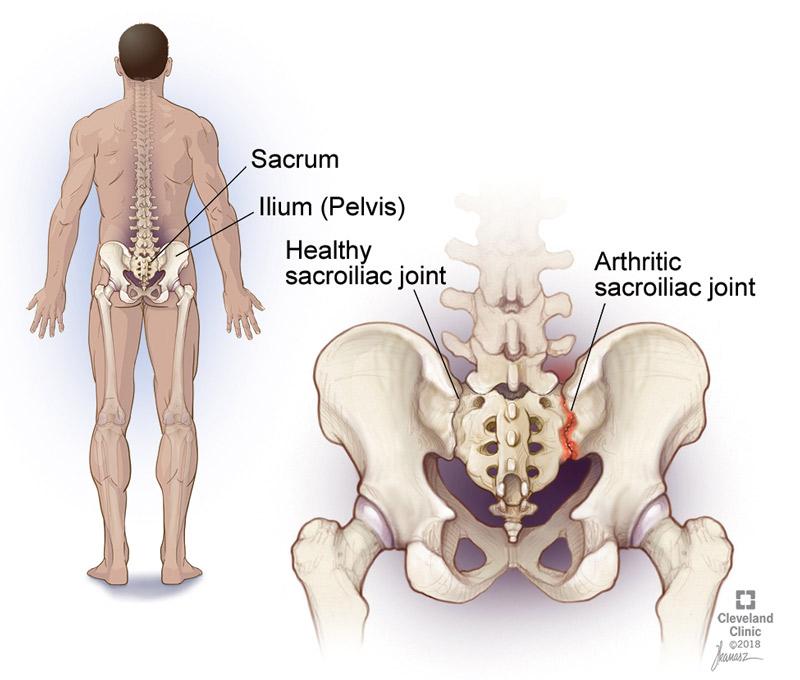
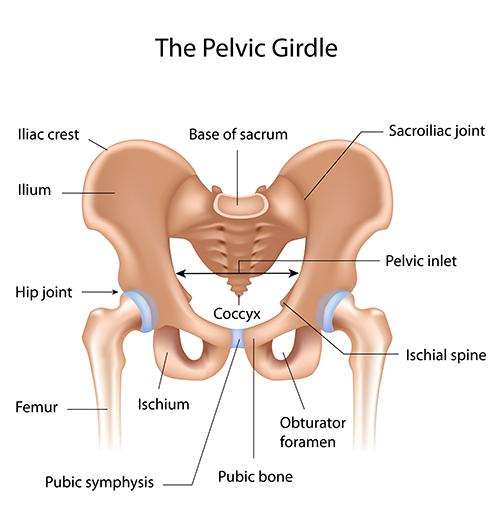
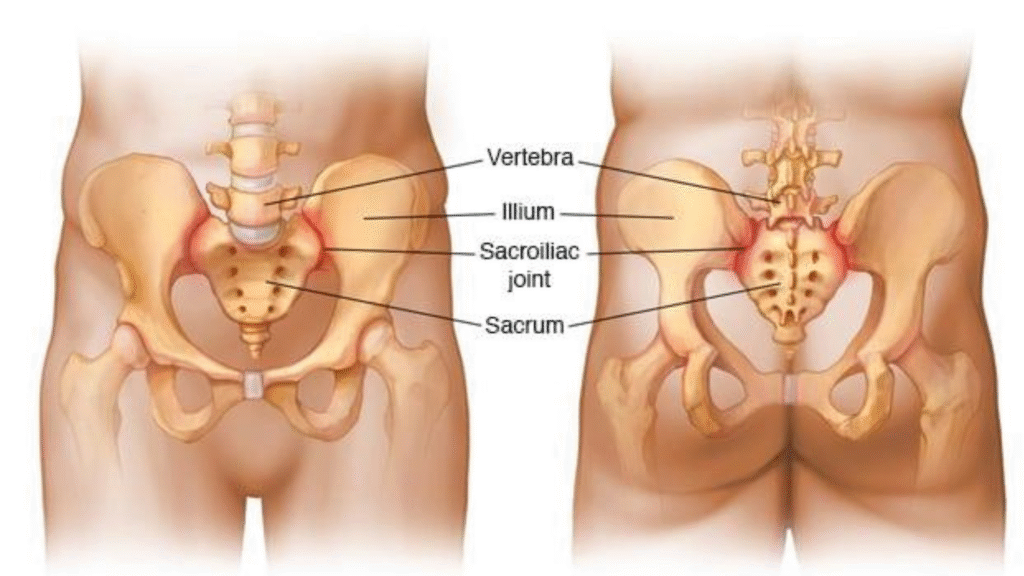
SI joint refers to Sacroiliac joint. This is the main joint of the body that connects the wing of pelvis with the triangular bone at the back of body. There are two such joints on both sides of the body’s lower back region. These joints act as the link between your lower back bones and your leg bones.
The SI joint experiences enormous amounts of strain throughout your lifetime. With every move you make – every step you take out of a chair, and how you carry your grocery bags – it’s constantly placing wear and tear on your SI joints. This wear and tear over time, coupled with the injury from an accident, trauma, or disease, results in dysfunction of the joint, causing serious, difficult to pinpoint, pain.
What is Sacroiliac Joint pain?
Sacroiliac joint pain occurs because of inflammation or injury to the SI joint.
Also known as Sacroiliitis (inflammation of the SI joint).. And here’s the tricky part – it is often confused with:
- Lower back pain
- Hip pain
- Muscle pain
Which is why many people go untreated for months
The sacrum bone, which is known by another name of os sacrum, lies right at the lowermost end of the lumbar vertebrae. It lies between the ilium bones, like the keystone in an arch. If any problem occurs within the sacrum bone, either because of trauma, degenerative diseases, or arthritis, there will be an effect on the sacroiliac joint as well as pain in the lower back, buttocks, groin, and thighs.
Sacroiliac Joint Pain Symptoms
There are many difficulties associated with SI joint problems, including their wide variability and deception of symptoms. While some people have dull and persistent pain, others report stabbing pain that occurs during certain movements. The most difficult aspect about sacroiliac joint pain symptoms may actually be how unexpected the symptoms are.
Classic Sacroiliac Joint Pain Symptoms
- Pain in the lower back and the buttocks: This pain will occur in the lower back, usually below the beltline. Occurs in the vicinity or on the dimple(PSIS) at the lower back.
- Pain increases after sitting for a prolonged period and when standing: pain will be increased when in sitting for a prolonged duration and when standing. Pain will decrease upon movement.
- Sharp pain upon certain actions: Pain will be acute when rising from a chair, lying on one side in bed, when climbing up the stairs, when rising from a bed and when standing on a single leg.
- Referred pain: SI joint pain commonly refers to the hip and thigh.
- Stiffness at the lower back or hip: Stiffness of the lower back and the hips will be felt especially at the beginning of the morning or after being sedentary for a short period.
- Muscles in the region are also painful: irritation will lead to the spasms in muscles around the SI joint (piriformis, gluteus medius, erector spinae).
Many patients ask: can SI joint cause groin pain? The answer is yes — referred pain into the groin is a recognized and often underappreciated feature of SI dysfunction.
How SI Joint Pain Differs from Lumbar Disc Pain
Since these two conditions can manifest with low back pain, it is important to differentiate SI joint dysfunction from lumbar radiculopathy (pinched nerve), for treatment purposes. Typically they are different:
| Feature | SI Joint Pain | Lumbar Disc / Nerve Pain |
| Primary pain location | One-sided low back, buttock, PSIS | Central low back, radiating down leg |
| Radiation pattern | Buttock, groin, posterior thigh | Below knee, into foot |
| Tingling / numbness | Rare | Common |
| Worse with | Sitting, rising, climbing stairs | Bending forward, coughing, sneezing |
| Better with | Walking, gentle movement | Lying flat, spinal decompression |
| Neurological signs | Usually absent | Reflex loss, motor weakness |
| Diagnostic test | FABER / Gaenslen’s test | Straight leg raise, MRI |
What Causes Sacroiliac Joint Pain?
There are no particular causes of SI joint disease. The reasons are multifactorial in nature, which means there are several causes. Determining what is causing the problem will help determine how to treat the disease.
1. Sacroiliitis – Joint Inflammation
Inflammation of either one or both sacroiliac joints is referred to as sacroiliitis. Sacroiliitis can happen alone and may be a symptom of several underlying diseases. Joint inflammation causes degeneration of the cartilage within the joint, causes swelling, and can even irritate the nerves, thus causing pain.
The causes of sacroiliitis are diverse, from joint overloading to autoimmune disease. The main factors which cause sacroiliitis are as follows:
- Spondyloarthropathies: Type of disease that develops due to a long term chronic inflammatory arthritis that causes the immune system to attack the spine and pelvic joints. The Ankylosing spondylitis is a type of chronic arthritis that cause inflamed joints with fused bones, resulting in deformity of the SI joints and the spine. Osteoarthritis: Wears out the joints and their articulating surfaces erode away; this type of arthritis is usually developed after the age of fifty or by the use of manual work.
- ligamentous laxity associated with pregnancy: This hypermobility, instability and severe pain particularly in late pregnancy and post partum.
- Trauma and fracture: Direct damage to the SI joint due to a fall on to the buttocks, motor vehicle accident or a repetitive stress fracture of the sacrum may cause an acutely arising sacroiliitis.
- Septica Sacroiliitis: Bacterial infection of the SI joint is a uncommon but fatal cause of the SI joint which mimics mechanical SI pain.
2. Ankylosing Spondylitis: From SI Joint Disorder to Whole-body Inflammation
Ankylosing spondylitis’ symptoms have a delayed appearance and are easily mistaken for regular back pain. Signs and symptoms of ankylosing spondylitis include:
- Long-term lower back and SI joint pain of more than three months’ duration
- Early morning stiffness of no less than 30 minutes (a sign of inflammation)
- Pain relieved by movement and worsened by rest
- Alternating buttocks’ pain (pain in the right buttock then the left then the right buttock again)
- Severe malaise & systemic inflammation
- Sp rigidity, marked increase in thoracic kyphosis (forward rounding of spine)
- Outside of joints: inflammation of eye, skin, intestine.
3. Dysfunction Due to Asymmetry in Leg Length
The smallest difference between leg lengths – as little as 1 centimeter – means each stride puts more pressure on one SI joint than the other. The consequence of such unbalanced loads can be one SI joint developing faster than another due to the constant wear, and thus causing unilateral SI joint pain. This problem can be easily solved by putting an orthotic shoe insert into one shoe.
4. Post-Surgical SI Joint Issues
Lumbar spinal fusion surgery is one of the most consistently identified risk factors for secondary SI joint pain. In cases where there is fusion between two or more vertebrae in the lumbar region, the normal distribution of load from one segment to another is shifted on to the sacroiliac joints, resulting in their being overloaded. It has been stated that SI joint issues are the cause of the problem in 30-40% of low back pain cases which have onset after the surgery for lumbar fusion.
How is Sacroiliac joint pain diagnosed?
There is no specific test to positively diagnose sacroiliac joint pain, and the reason why this is a missed diagnosis again.
Physical Examination and Provocative Tests
A skilled specialist will use a battery of manual tests designed to stress the SI joint and reproduce your pain. The most reliable include:
- FABER test: Flexion, abduction, external rotation of hip. Leg is placed into the “number four” position. Hip is depressed. Pain in the SI joint region is a positive finding.
- Gaenslen’s Test: One leg is extended off the table edge while the other is pulled to the chest. The shearing force this creates on the SI joint reproduces pain in positive cases.
- Thigh Thrust Test: Axial force is applied through the femur with the hip flexed, stressing the posterior SI ligaments. One of the most sensitive individual tests for SI joint dysfunction.
- Distraction and Compression Tests: Direct pressure applied to the iliac crests to stress the SI joint ligaments.
Clinical research shows that three or more positive provocation tests has sensitivity of approximately 85 percent for SI joint pain — making the physical exam a powerful first screening tool.
Sacroiliac Joint Pain Treatment: From Conservative Care to Advanced Options
SI Joint Pain Treatment Is Also Multi-factorial. Just like the reasons for the development of pain in the SI joint are numerous, sacroiliac joint pain treatment is multi-factorial as well. Here is the full spectrum of treatment options.
Stage 1: Conservative Management at Home
These proven home remedies should be considered the bedrock of the treatment for patients with mild to moderate SI joint pain, particularly those in the early stages of the disorder:
- Activity modification: advise to avoid prolonged static sitting, lifting, and unilateral loading tasks (e.g. Lunges); it’s better to have frequent short walk as compared to prolonged standing or sitting in a fixed posture.
- Cold/Heat therapy: Use ice pack on the SI joint region for 15-20 minutes to reduce joint inflammation.Heat may be applied after 72 hours to soothe any muscle spasm that occurs from joint irritation.
- Pain relieving medication: NSAIDS such as ibuprofen and naproxen may be used to ease the pain and swelling of a joint. NSAIDs are even used as primary disease treatment in sacroiliitis caused by ankylosing spondylitis.
- Sacroiliac Belt: A tight support belt worn on the pelvis can help minimize joint micromovements and provide effective pain relief, especially in cases where SI dysfunction is associated with pregnancy.
- Posture and ergonomic measures. Avoid soft chairs. Straight legs and don’t let the knees cross. Your knees should remain touching the floor. Use a lumbar roll for when you sit down and your lower back is unsupported. When you get up out of the chair sit tall and keep the back neutral. Using both hands to rise evenly.
Stage 2: Physiotherapy and Rehabilitation
It is thought that a specially formulated physiotherapy regimen targeted to a condition of sacroiliac joint dysfunction is essential to managing this problem in the long term. This is not generic back strengthening — it requires a therapist experienced with SI joint mechanics.
- Core Stabilization: Deep stabilizing muscles of lumbar spine/pelvis (multifidus, transversus abdominis, pelvic floor muscles) act like a brace on SI joints.
- Strengthening of the Glutes and Hips: Impaired mechanics in the pelvis are caused by weak gluteal muscles (specifically the gluteus medius) which result in increased load on SI joints.
- Manual Therapy and Joint Mobilization techniques: Manual therapy of the SI joint (SI joint mobilization, MET’s, myofascial release of piriformis/quadratus lumborum)
- Physical Therapy for Ankylosing Spondylitis: Physical therapy for ankylosing spondylitis has even more importance in this specific population because it is one of the most evidenced based Ankylosing spondylitis treatment options for retarding progression of the disease process.
Stage 3: Medications for Sacroiliitis and Joint Inflammation
If the conservative and physical treatment is proving insufficient, then your specialist will look to drug treatments.
Medications & Anti-Inflammatory Drugs for Muscle Pain
- Prescription NSAID / Cox 2 inhibitors
- Muscle relaxants
- Oral corticosteroids
Muscle Inflammation Medicine for Inflammatory Causes
Appropriate medications for muscle inflammation for these conditions: DMARDs and biologics:
- TNF inhibitors (adalimumab, etanercept, infliximab)
- IL-17 inhibitors (secukinumab, ixekizumab)
- JAK inhibitors (tofacitinib, upadacitinib)
Management of biologics for AS necessitates coordination between a rheumatologist for managing disease processes and a spine specialist for structural/mechanical problems-this is another important factor driving the need for comprehensive and interdisciplinary treatment.
Stage 4: Interventional Sacroiliitis Treatments
When conservative management and medications provide inadequate relief, interventional procedures offer a powerful — and often transformative — next step.
- SI Joint Steroid Injection: The administration of corticosteroids within the sacroiliac joint guided by images provides a strong anti-inflammatory agent along with precise delivery.
- Radiofrequency Ablation (RFA) of SI Joint Nerves: Those individuals who obtain a good response with some relief from injections can use this long-lasting method.
- Platelet-Rich Plasma (PRP) Injection: This is a recently described treatment for SI disease; a concentrated amount of growth factors taken from the blood of the patient is injected into the SI joint.
Treatment options for Ankylosing Spondylitis
Sinceankylosing spondylitis is common and significant amongst the causes of SI disease, it requires a unique explanation due to its unique pathophysiology.
| Treatment Category | Examples | Primary Goal |
| NSAIDs | Naproxen, celecoxib, indomethacin | Pain and inflammation control |
| TNF inhibitors | Adalimumab, etanercept, certolizumab | Disease modification, slow progression |
| IL-17 inhibitors | Secukinumab, ixekizumab | Disease modification (TNF non-responders) |
| JAK inhibitors | Upadacitinib, tofacitinib | Oral targeted therapy option |
| Physical therapy | Ankylosing spondylitis physical therapy | Function, posture, mobility |
| Hydrotherapy | Pool-based exercise | Pain relief, spinal mobility |
| SI joint injection | Corticosteroid + anesthetic | Focal inflammation control |
| SI joint fusion | Minimally invasive titanium implants | Structural stabilization (selected cases) |
FAQs
Question: What are the signs of SI joint pain?
Answer: Pain symptoms: Sharp or achy pain in the buttocks/low back region (on one side), under the waistline.
Question: Is groin pain a possibility with SI joint dysfunction?
Answer: Yes – the pain from SI joint dysfunction can also be felt in the groin, front of the thigh, and sometimes even the knee area.
Question: How can SI joint pain be relieved quickly?
Answer: In cases where there is SI joint pain flare-up, using cold packs, taking NSAIDs, and using an SI joint belt would be the quickest method.
Que: Is walking helpful for SI joint pain?
Answer: Yes – Walking is extremely beneficial to patients with SI joint problems, as this helps move the joints symmetrically without much force being applied.
Question: How does sacroiliitis differ from SI joint dysfunction?
Answer: Sacroiliitis involves the inflammation of the SI joints whereas SI joint dysfunction refers to the pain caused by SI joints.
Question: Is the involvement of SI joint absolute in ankylosing spondylitis?
Answer: Yes – involvement of SI joint is absolutely universal in ankylosing spondylitis
Why CT Advanced Spine for Sacroiliac Joint Pain?
Sacroiliac joint pain is complex, often misdiagnosed, and highly individual. The difference between an accurate SI joint diagnosis and a missed one can mean years of ineffective treatment and progressive joint damage. Getting to the right specialist, one who understands the full diagnostic and treatment landscape is the single most important step you can take.
At CT Advanced Spine, the approach to SI joint pain begins with listening. Dr. Ashaish Upadyay and the team take the time to understand the full story of your pain, when it started, what makes it better or worse, what treatments you’ve already tried, and what your life looks like when the pain is at its worst. That understanding shapes a diagnostic plan that leaves nothing to guesswork.
From there, treatment is personalized – not from a protocol template, but from your imaging, your exam findings, your lifestyle, and your goals. Whether you need a precision guided SI joint injection, a structured physical therapy program, coordination with a rheumatologist for AS management, or a conversation about minimally invasive SI joint fusion, CT Advanced Spine has the expertise and the technology to deliver it.
Explore our sacroiliac joint pain services and patient resources at CT Advanced Spine.
Conclusion
Pain originating from the sacroiliac joint is an illness that can take away many years of quality life from someone, not due to its incurability, but rather its misdiagnosis. When the right treatment is diagnosed, the course becomes very straightforward. And the results? They are truly outstanding.
Here are the core takeaways from this guide:
- The sacroiliac joint is the structural bridge between your spine and pelvis — small in movement, enormous in mechanical significance
- The symptoms of sacroiliac joint disorder include back pain and pain in the buttocks area, referred to as groin pain, and stiffness – frequently mistaken for lumbar disc disorder or hip pathritis.
- There are various causes of sacroiliac disorders, including sacroiliitis, degeneration, ankylosing spondylitis, trauma, pregnancy, or surgical modification.
- The causes of sacroiliitis include mechanical stress or auto-immune inflammation – both of which require unique therapy.
- Ankylosing spondylitis symptoms often start in the SI joints and require early diagnosis for biologic therapy to be most effective
- Sacroiliac joint pain treatment progresses from conservative care through physical therapy, medications, injections, radiofrequency ablation, and — for appropriate candidates — minimally invasive SI joint fusion
- Ankylosing spondylitis physical therapy combined with biologics is the gold standard for AS management and function preservation
You don’t have to keep living with pain that nobody has been able to explain. The answers — and the relief — are closer than you think.
Stop Living with SI Joint Pain — Get Expert Help Today
The sacroiliac joint specialists at CT Advanced Spine offer precise diagnosis and individualized treatment — from targeted sacroiliitis therapies and SI joint injections to minimally invasive joint fusion.
Schedule your consultation today at ctadvancedspine.com and begin your journey to life without pain.