

Pinched Nerve in Back: What It Is, Why It Happens & How to Treat It
You bend down to pick something up… and boom — a sharp, electric pain shoots through your back like a warning signal you didn’t sign up for.
That’s often how a pinched nerve in back makes its dramatic entry. It’s not just “normal back pain.” It’s sharper, more annoying, and sometimes downright scary – especially when it travels to your legs or arms. Here’s the thing:
Most people ignore it at first. They stretch, rest, maybe pop a painkiller… hoping it’ll magically disappear. Sometimes it does.
But sometimes? It lingers, worsens, and starts affecting your daily life. This guide breaks it all down — no fluff, no jargon. Just real, practical info you actually need.
What you’ll learn:
- What a pinched nerve?
- Common pinched nerve symptoms
- Why it happens
- Proven pinched nerve in back treatment options
- Home remedies vs. when to see a specialist
- How experts like Ct Advanced Spine help people recover faster
Let’s get into it.
Table of Contents
What Is a Pinched Nerve in Back?
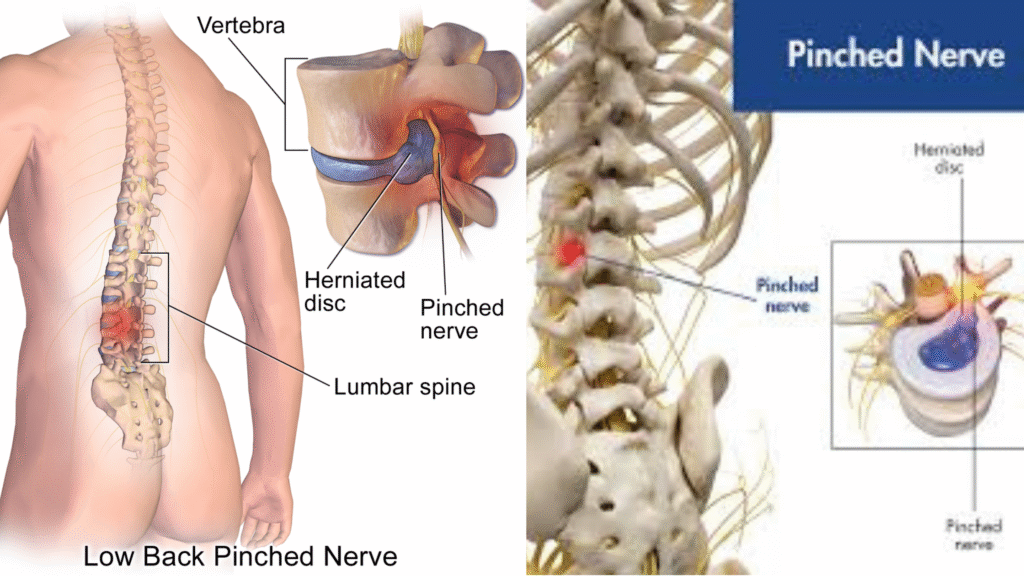
When bones, discs or muscles are press hard on a nerve then a pinched nerve in the back happens. It seems simple. The effects can be really different. They can be a little annoying or really bad. It depends on which nerve’s affected and how much its compressed.
Think of it like this, Your nerves act like a cables which transfer signals between your brain and the rest of your body.
Now, imagine someone pressing hard on one of those cables. The signals can’t travel anymore. This interference causes pain tingling, numbness and weakness. A nerve is like a cable carrying signals between your brain and body. Now imagine someone stepping on that cable. Yeah… signals don’t travel smoothly anymore.That’s exactly what causes:
- Pain
- Tingling
- Numbness
- Weakness
Types of Pinched Nerves in the Back
Not all pinched nerves are not all located in the same spot. The location of the pinched nerve is what determines the kind of symptoms you will have. A pinched nerve, in the area happens in the neck. This type of pinched nerve a pinched nerve tends to send pain into the shoulders and arms.
1. Cervical Pinched Nerve
The cervical pinched nerve is often linked to posture. This poor posture can develop after years of sitting with bad posture like hunching over a phone or computer screen. means, Often caused by poor posture (hello, phone scrolling)
2. Thoracic Pinched Nerve in the Upper Back
Pinched nerves in the thoracic region involve the upper back, and the possibilities of having such pinched nerves are quite minimal than the first two. However, when such nerves are pinched, there will be a feeling of squeezing the chest and/or ribs that can be confused with heart ailments.
3. Lumbar Pinched Nerve in the Lower Back
The lumbar pinched nerve is the kind of pinched nerve that happens often. The lumbar pinched nerve is, in the back. It can be very painful. This pain can go down into the hips the buttocks and the legs. When people talk about sciatica they are usually talking about the lumbar pinched nerve. The lumbar pinched nerve is what causes sciatica.
Common Pinched Nerve Symptoms You Shouldn’t Ignore
A pinched nerve has a pattern that is quite clear if one has been informed of what to expect. The pain from a pinched nerve is never stagnant but moves from one place to another, ruling out muscle stiffness and soreness and proving that nerve pain is experienced instead. Pinched nerve symptoms appear in a predictable manner. Here are the most common pinched nerve symptoms:
1. Sharp or Burning Pain
One of the top signs is a sharp or burning pain—sometimes it even zips through you like electricity. It tends to get worse with movement and can catch you completely off guard.
2. Radiating Pain
Many people experience radiating pain that travels from the back down into the legs or out through the arms.
3. Numbness or Tingling
Numbness and tingling are very common too. You know, that feeling of pins and needles. This usually happens in the hands or the feet or the legs.
4. Muscle Weakness
Some people also have muscle weakness. They have trouble gripping things. They feel unsteady on their feet.
5. Increased Pain While Sitting
If you have a desk job you might have noticed that sitting for a time makes nerve pain worse. This is because sitting for a time puts more pressure on the spine.
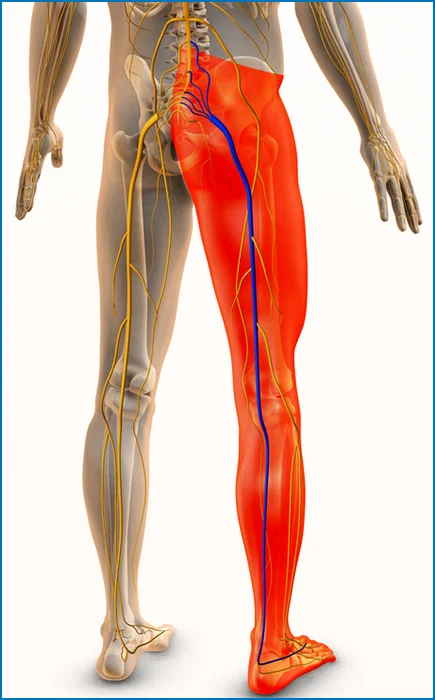
Real talk: The main thing to know about nerve pain is that it is different, from muscle pain. Nerve pain does not behave like muscle pain. Your body is sending you signals when it spreads it burns, it tingles. This is your body telling you that something needs attention.
What Are Causes of Pinched Nerve in the Back?
Most people do not develop a pinched nerve at the back overnight. A pinched nerve in back never develops overnight; it builds up gradually. This is often because of your everyday life and wear and tear on your body. It builds over time.
1. Herniated Disc (Slip Disc)
A herniated disc is a common cause of a pinched nerve in back. The herniated disc is the cushioning between your vertebrae that slowly displaces. A pinched nerve in the back can be very painful.
2. Poor Posture
Another major contributor that receives little attention is posture. If a person spends eight or more hours per day in a slumped position over a desk, the spine absorbs the consequences of this daily, and, in time, this becomes apparent.
3. Repetitive Movements
Repetitive movements are also a part of the problem. Lifting weights at the gym with form carrying heavy objects at work or sleeping in an awkward position every night can cause damage that adds up over time and leads to nerve compression.
4. Bone Spurs
Some people get bone spurs, which are small growths on the vertebrae. These growths can press on nerves. You wouldn’t know you have them unless you had an imaging test.
5. Obesity
Carrying weight is another factor. Extra weight means more pressure on the spine.
6. Aging
Discs naturally lose flexibility over time. Discs naturally lose moisture and flexibility, making them more prone to compression and injury.
How Is a Pinched Nerve Diagnosed?
Doctors look for patterns to make a diagnosis. A doctor will examine you. Test your reflexes and strength to see how your nerves are working.
An MRI scan is usually the way to find out exactly where the compression is happening. Doctors may also use X-rays and CT scans.
Common Diagnostic Methods:
- Physical examination
- Reflex and strength testing
- MRI scan (most accurate)
- X-rays
- CT scan
At specialized centers like CT Advanced Spine, diagnosis is more precise because they combine imaging with functional assessments – meaning they don’t just see the problem; they understand how it affects movement.
Also Read: Sciatica Pain Treatment: Symptoms & How It’s Treated
Pinched Nerve in Back Treatment
This is basically the sticking point for most people. Because everybody wants a magic bullet and there ain’t one. What is effective varies on the severity of the condition, the duration of suffering and possible causes of the nerve compression in the first place.
Treatment depends on:
- Severity
- Duration
- Root cause
Let’s break it down.
1. Conservative (Non-Surgical) Treatments
- Rest (But Not Too Much): Rest but not too much. Avoid whatever movements are triggering the pain, but don’t lie in bed for days. However, the over rest only decelerates the entire process.
- Physical Therapy: Physical therapy is one of the most trusted options. Because of it the muscles around your spine are builds up, corrects posture mistakes, and gradually relieves pressure on the nerve.
- Hot & Cold Therapy: Hot and cold therapy are effective methods of day to day symptom control. Ice therapy helps in inflammation control while heat therapy helps in loosening muscles surrounding the area which have contracted.
- Medications: Anti-inflammatories, ordinary painkillers, and muscle relaxants — won’t fix the underlying problem, but they will make the recovery process much more bearable.
- Lifestyle Adjustments: Switching to an ergonomic chair, changing the way you sleep, and aiming for a healthier weight all help decrease the amount of pressure you put on your spine daily.
2. Advanced Non-Surgical Treatments
Specialized clinics such as CT Advanced Spine are essential in this context. They use targeted therapies designed to fix the root cause, not just mask pain.
- Spinal Decompression Therapy
- Gently stretches spine
- Relieves pressure on nerves
- Chiropractic Adjustments
- Realigns spine
- Improves nerve function
- Laser Therapy
- Promotes healing
- Reduces inflammation
- Rehabilitation Programs
- Personalized recovery plans
- Focus on long-term prevention
Personalized rehabilitation programs are designed around your particular case and aimed not only at making you pain-free but also at maintaining that result.
3. Surgical Treatment
Let’s be clear — surgery is not the first option. Surgery isn’t a quick choice, but it only comes up when:
- Pain is severe and its effects are not mitigated by any other form of treatment over a given time.
- There’s a loss of bladder or bowel control.
- There is a significant muscle weakness.
Common Procedures:
- Discectomy-removes part of the disc that is putting pressure on the nerve.
- Laminectomy – surgically removes part of the bone causing the pressure.
Most people recover without surgery if treated early. The reality is, most people who catch it early and stick with treatment never get to this point.
Home Remedies That Actually Help
There is no need to book an appointment with the clinic on the first day. There are lots of things you can do at home which will truly help. Here’s what you can do at home:
- Daily Relief Tips:
- Gentle stretching
- Use lumbar support while sitting
- Sleep with a pillow under knees
- Stay active (walking helps)
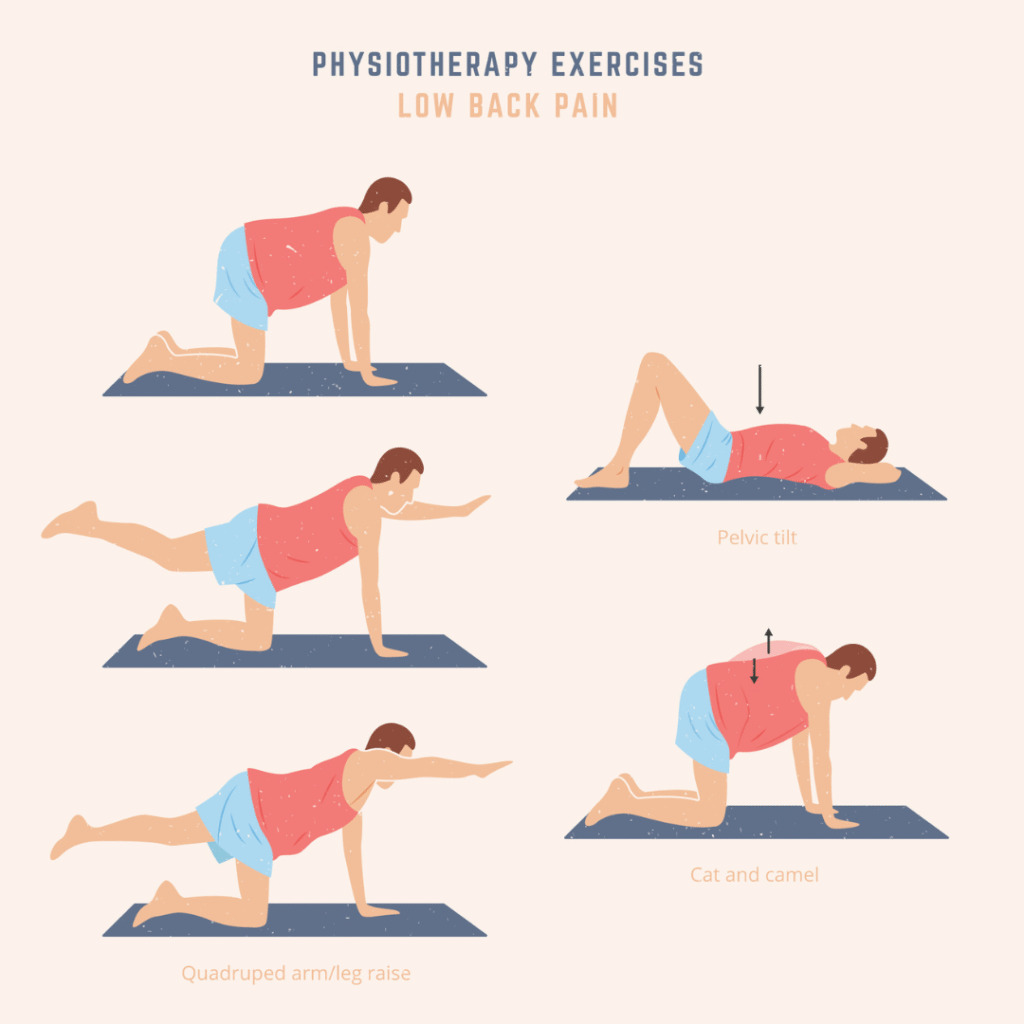
- Best Exercises:
- Cat-cow stretch
- Pelvic tilt
- Knee-to-chest stretch
Consistency beats intensity.

When Should You See a Doctor?
Don’t play hero with nerve pain. See a specialist if:
- Pain lasts more than 1–2 weeks
- Symptoms worsen
- You feel numbness or weakness
- Pain spreads to legs or arms
Early treatment = faster recovery.
Real-Life Example (Why Early Treatment Matters)
One patient ignored lower back pain for months. Thought it was just “work stress.” Turns out — it was a compressed nerve due to a disc issue.
After targeted therapy at Ct Advanced Spine, pain reduced within weeks — no surgery needed.
Lesson?
Delay makes it worse. Always.
How to Avoid a Pinched Nerve
Taking care of your spine is really important before any problems happen. It’s worth making an effort.
You can start by fixing how you sit taking breaks every 30 to 40 minutes if you work at a desk and getting stronger core muscles.
Learning to lift things the way and keeping a healthy weight are also important.
These things are not hard to do. They can make a big difference. Your spine deals with a lot of stress, over your lifetime. Giving it some care can help a lot.
Spine care is essential to prevent problems. Taking care of your spine taking care of your posture and taking care of your health are all connected. You can take care of your spine by doing things. Your spine isn’t indestructible. Treat it like it matters.
FAQs
Que. What does a pinched nerve in the back feel like?
Ans. It feels like sharp, burning, or radiating pain, often accompanied by tingling, numbness, or muscle weakness.
Que. Can a pinched nerve heal on its own?
Ans. Yes, mild cases often heal with rest, stretching, and lifestyle changes. Severe cases require medical treatment.
Que. How long does it take to recover?
Ans. • Mild: Few days to weeks
• Moderate: 4–6 weeks
• Severe: Several months
Que. Is walking good for a pinched nerve?
Yes. Gentle slow walking improves blood flow and reduces stiffness.
Que. What is the fastest way to relieve a pinched nerve?
Ans. The fastest way to relieve a pinched nerve are Combining rest, physical therapy, posture correction, and the targeted treatment.
Conclusion
It is not advisable to attempt forcing a pinched nerve out of your body in the hopes that it will eventually vanish. Pinched nerves are an indicator of a deeper issue; if you allow time to pass without giving proper importance to the condition of your pinched nerve, the warning from your body may manifest into a louder solution.
Ignore it, and it gets louder. Address it early, and recovery becomes way easier. The bottom line:
- Know the symptoms
- Understand the cause
- Take action early
- Choose the right treatment
Ready to Fix the Root Cause (Not Just the Pain)?
CT Advanced Spine has non-surgical options to help ease your back problems.
Do you want to solve your source of pain and not just ease your symptoms? If you are looking for a solution to permanently eliminate your back pain, then talk to specialists. Ct Advanced Spine specializes in:
- Non-surgical spine treatments
- Advanced diagnostics
- Personalized recovery plans
Don’t wait for the pain to control your life.
Book a consultation and get back to moving freely — the way you should be.