

Pinched Nerve in Neck: Symptoms, Causes & Treatment
Someday, You wake up and stretch your neck, but suddenly there’s this sharp pull that doesn’t feel right and the moment you try to look over your shoulder, a sharp, electric jolt fires from your neck all the way down into your arm. You try to ignore it. Maybe it’s just bad sleep, right?
But then the pain starts moving — from your neck to your shoulder, maybe down your arm. BBy lunchtime, your fingers have started to tingle. By nightfall, your ability to hold a coffee mug has deteriorated so much that now it is more than just uncomfortable, it is disruptive.
Sitting becomes impossible; work becomes irksome; even holding your mobile phone becomes unbearable. It could be the result of a pinched nerve in your neck—a highly prevalent, extremely annoying, but very easily treated spinal problem. That’s usually how a pinched nerve in neck shows up — quietly at first, then suddenly impossible to ignore.
Here’s the reality: an estimated 83 people per 100,000 develop cervical radiculopathy (the medical term for a pinched nerve in the neck) every year. That’s a staggering number — and many of them spend weeks or even months searching for answers before getting the right care. most people wait too long and assume it’ll fix by itself, and sometimes it does. But when it doesn’t fix, it can start interfering with daily life in ways you didn’t expect.
This guide is written to change that for you. By the time when you finish reading, you’ll understand exactly:
- What a pinched nerve in the neck is,
- How to recognize the full range of pinched nerve symptoms,
- The difference between pinched nerve in neck or shoulder symptoms,
- What to do for a pinched nerve in the neck and
- What cervical radiculopathy treatment options are available to you right now.
Let’s get into it.
Table of Contents
What Is a Pinched Nerve in the Neck?
Many of us must have heard of the phrase “pinched nerve,” but the anatomy involved in pinched nerve should be understood because only after understanding the condition can we attempt treating it.
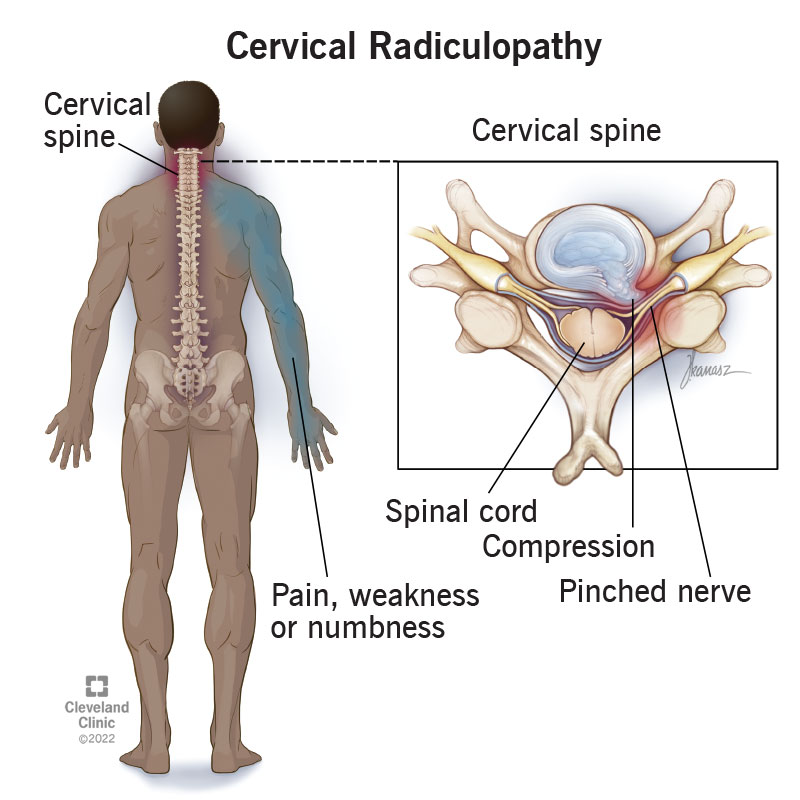
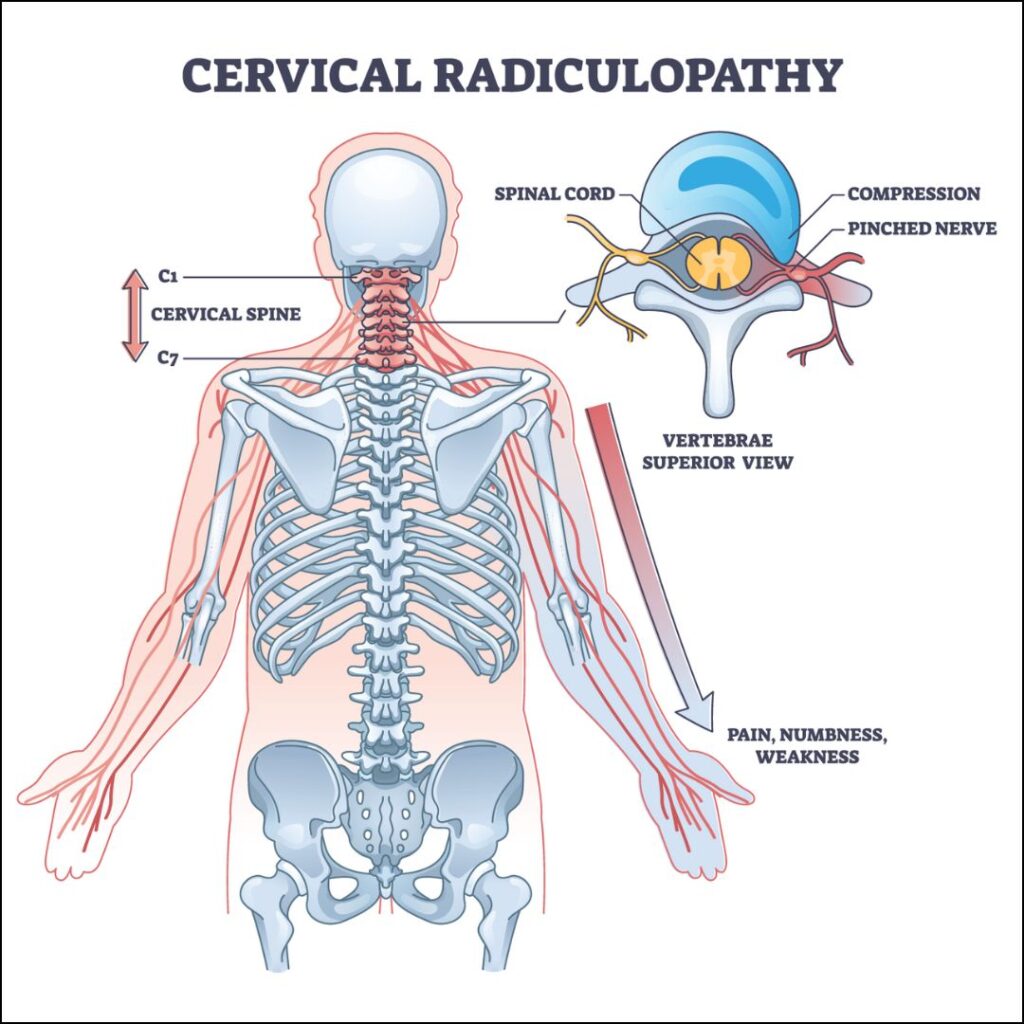
Pinched nerve in neck, known as cervical radiculopathy, is defined as pinching or irritation of a spinal nerve associated with the cervical vertebrae.
The structures within your neck consist of different components such as vertebrae, spinal discs, muscles, and nerves.. There are seven cervical vertebrae, referred to as C1 to C7, with C standing for cervical. Spinal discs sit between the two adjacent cervical vertebrae. They provide shock absorption and prevent friction between the bones.
| Nerve Root | Pain / Tingling Zone | Muscle Weakness Seen In |
| C4 | Shoulder top, upper arm | Shoulder elevation |
| C5 | Outer upper arm, shoulder | Deltoid, biceps |
| C6 | Thumb, index finger, forearm | Wrist extension, biceps |
| C7 (most common) | Middle finger, triceps area | Triceps, wrist flexion |
| C8 | Little finger, ring finger | Hand grip, finger flexion |
This table is your roadmap for conversations with your doctor. If you tell precisely where you feel the symptom, then even without performing any tests, a professional cervical radiculopathy physician can often locate the damaged nerve root.
Consider now, your nerve is like an electrical cable which sends impulses. If something presses on that wire, the signals get disturbed. That’s when you feel:
• Pain
• Tingling
• Numbness
• Weakness
And the interesting part? The pain doesn’t always stay in your neck.
Why the Location of the Pinch Matters
The territory of each nerve root in your cervical spine is precisely defined. That is why, if your nerve in the neck gets pinched, you may not feel any problem in the neck itself but rather at the place controlled by that nerve.
Pinched Nerve in Neck Symptoms
This is where people misread the situation. One of the most confusing aspects of a pinched nerve in the neck is how wide-ranging the pinched nerve symptoms can be. Some people feel primarily neck pain. You feel pain in your shoulder or arm — so naturally, you assume it’s a muscle issue. But many times, the root cause is actually your neck. Understanding the full spectrum — including the warning signs you absolutely cannot ignore — is essential.
The Core Pinched Nerve in Neck Symptoms include:
- Radiating arm pain: You get this arm pain that radiates from the neck down to the shoulder and into the arm or hand. It feels like it is burning or aching. It can be a sharp pain. A lot of people say it feels like a shock or that it is shooting pain.
- Tingling and ‘pins and needles’: You can get this tingling feeling. It feels like pins and needles in your fingers or hand. It is like a feeling or it feels like your skin is being pricked with something. This usually happens in a pattern and it is related to the nerve root that is compressed.
- Numbness: Sometimes you get numbness in an area of your skin. It feels like the skin is asleep or you cannot feel anything in that area. This usually happens in the forearm or the hand or in fingers.
- Muscle weakness: You can have muscle weakness which makes it hard to grip things or button your shirt or lift your arm. This is a symptom because it means that the nerve is really involved.
- Neck pain and stiffness: You can get pain and stiffness in your neck. It feels like an ache or it feels stiff and it can be worse when you turn your head or look up.
- Headaches: You can get headaches that’re dull and aching at the base of the skull. These are called headaches and they are common when the nerve roots, in the upper cervical area are involved.
Here’s a practical side-by-side breakdown to help you understand what you might be dealing with:
| Symptom Feature | Pinched Nerve in Neck | Primary Shoulder Problem |
| Pain location | Neck → shoulder → arm → hand | Shoulder joint, may radiate to upper arm |
| Tingling / numbness | Very common; into fingers | Uncommon unless nerve also involved |
| Aggravated by | Moving or turning the head | Moving the shoulder / lifting |
| Relieved by | Resting arm on head (Bakody sign) | Rest; avoiding shoulder movement |
| Muscle weakness | Arm, wrist, grip | Shoulder elevation, internal rotation |
| Night pain | Variable | Often severe (especially lying on shoulder) |
| Headaches | Yes, base of skull | Uncommon |
If your pain moves instead of staying in one place, it’s likely nerve-related — not just muscle strain.
What Causes a Pinched Nerve in the Neck?
The truth is — this rarely occurs all of a sudden. This is something that gradually happens.
The various causes of cervical radiculopathy have some specific treatment consequences. Knowing the cause of your symptoms allows your expert to choose the right way to address the problem.
1. Herniated or Bulging Disc
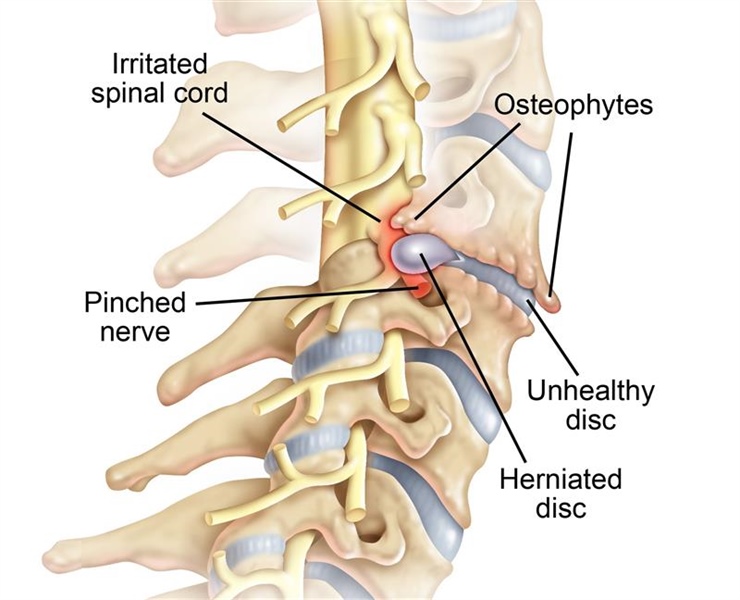
The disc shifts and presses on a nerve and this is the most common cause in people under 50. The soft jelly-like substance in the center of the disc protrudes out of a hole in the outer layer of the disc and puts pressure on the spinal nerve. This can happen due to one sudden motion, a lifting accident, or slowly over time.
2. Poor Posture (The Silent Trigger)
Looking down at screens for hours puts stress on your neck.
The rise of smartphones and remote work has created an epidemic of what clinicians call ‘text neck’ — prolonged forward head posture that dramatically increases cervical spine load. The research also reveals that an extra 10 pounds pressure will be placed on the neck region each time the head moves forward by one inch.
3. Degenerative Disc Disease (DDD)
Despite its alarming name, DDD is simply the normal aging of spinal discs. Discs naturally lose water content and height with age, reducing the cushioning they provide and narrowing the space available for nerve roots. DDD is almost universally present in adults over 60, though it causes symptoms in only a subset of people.
4. Bone Spurs
Extra bone growth compresses nerves.
Cervical spondylosis, Older adults often get trapped nerves because their neck bones wear out over time. When cushions between vertebrae shrink and padding thins, bone growth kicks in to hold things together – these bony bits go by another name: osteophytes. Bumps like these form as a fix, not by choice. These spurs can intrude into the foramen and compress nerve roots. Unlike soft herniations, bone spurs don’t reabsorb and often require more active management.
5. Injury or Trauma
If you get hurt in a fall or a collision while playing sports or at work you might hurt your neck really badly. This can cause a disc in your neck to get out of place or even break, which can put a lot of pressure on the nerves in your neck away. When this kind of injury happens it can cause a lot of pain and problems. It usually happens all of a sudden. So if you have a neck injury like this you should see a doctor soon as possible to get it checked out. Cervical radiculopathy, from a trauma is a thing and it needs to be looked at right away.
Understanding Cervical Radiculopathy
You’ll often hear doctors use the term cervical radiculopathy and it sounds complicated, but it’s not. In simple terms, there is a compressed nerve in your neck causing symptoms along the pathway. Therefore, a pinched nerve in neck can be referred to as cervical radiculopathy.
Why Nerve Pain Feels Different
Muscle pain:
- Stays in one place
- Improves with rest
Nerve pain:
- Travels
- Tingles
- Feels electric
- Doesn’t fully settle with rest
That’s why people often underestimate it at first.
How It’s Diagnosed
Doctors don’t just rely on symptoms. If you see a cervical radiculopathy specialist, the evaluation will typically includes:
- Physical exam
- Reflex testing
- Strength checks
- MRI (most accurate)
- X-rays or CT scans
At Ct Advanced Spine, diagnosis goes beyond imaging. They assess how the condition affects your movement and daily function — which helps create more targeted treatment plans.
Pinched Nerve in Neck Treatment
Here’s the most important thing to understand about cervical radiculopathy treatment: it’s staged. You start with the least invasive, most conservative approaches — and the majority of people never need to go further. Treatment depends on:
- Severity
- Duration
- Root cause
1. Conservative (Non-Surgical) Treatment
If you have just started to notice symptoms these steps that are based on evidence can help reduce pain and create an environment for the body to heal:
- Activity modification: You should modify your activities, but not bed rest.Complete rest actually slows recovery by reducing blood flow to healing tissues. Scale back aggravating activities, but stay gently active. Still try to stay a little active. It is okay to take walks do some light stretching and do your daily activities carefully.
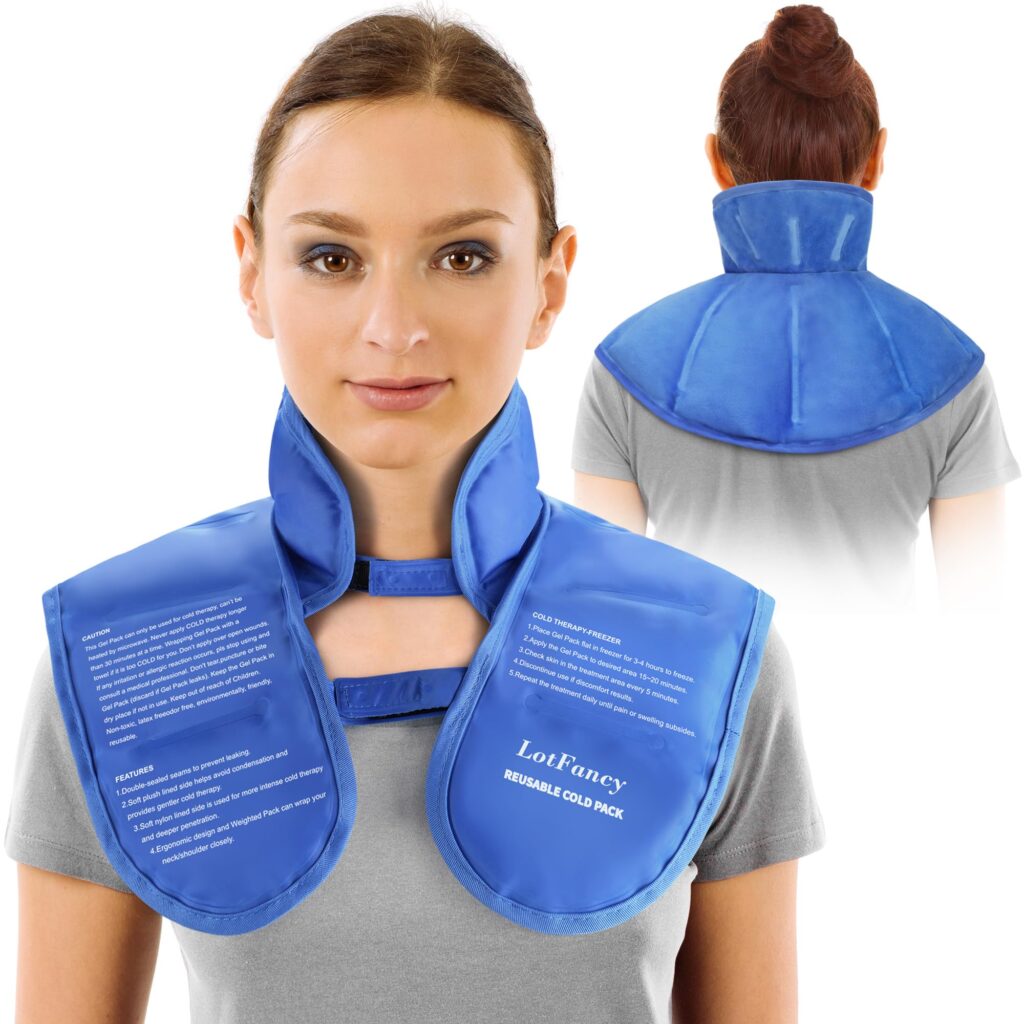
- Ice (first 48–72 hours), then heat: You should use ice for the few days and then use heat: cold helps to reduce swelling when you first get hurt. After a days you can switch to using a heating pad or taking a warm shower to help relax your tight muscles and improve the flow of blood to the nerves that are affected.
- Over-the-counter NSAIDs: You can take medicines that you can buy without a prescription like Conservative Treatment medicines: Ibuprofen, which is also known as Advil or Motrin or naproxen which is also known as Aleve can help with both pain and swelling. You should take these medicines with food follow the instructions on the label and check with your doctor if you are taking any medicines.
- Cervical pillow and sleep position: You should use a pillow for your neck and sleep in a good position: you should sleep on your back or side with a pillow that is shaped to fit your neck and help it stay in a natural position. You should never sleep on your stomach because it can cause your neck to be twisted for a time.
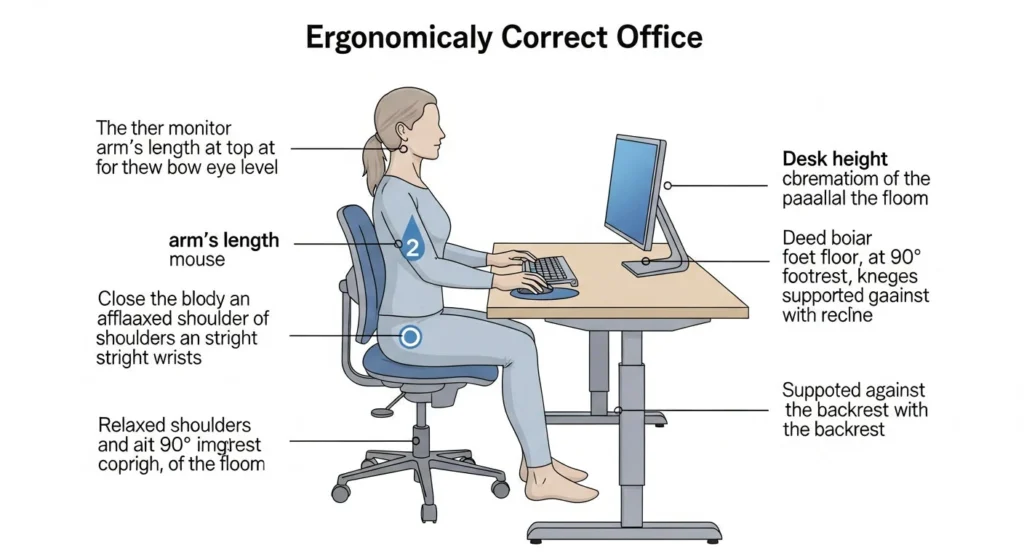
- Ergonomic setup: You should keep your monitor at an eye level, have your keyboard set in such a way that you have 90-degree angles on your elbows, and set an alarm after every 45 minutes to stretch your neck.
2. Advanced Cervical Radiculopathy Treatment
This is where cervical radiculopathy therapies become important. At Ct Advanced Spine, treatment focuses on fixing the root cause.
- Spinal Decompression Therapy: Relieves pressure on nerves. Manual decompression of the foramina via manual stretching of the neck gives more room for the irritated nerve root. Both in-clinic and home traction devices have good clinical evidence behind them.
- Joint Mobilization & Soft Tissue Therapy: Joint mobilization and soft tissue techniques to increase mobility, decrease muscle spasm, and reduce pain.
- Neural Glide: Specialized exercises that allow the irritated nerve to slide easier through its tissue tunnel – thus desensitizing and decreasing pain.
- Deep neck flexor strengthening: Small muscles that provide support to the cervical region and that are typically weak in cases of cervical radiculopathy can be strengthened with targeted exercises.
- Postural retraining: Proper alignment of the head and shoulders is essential – without this, other treatment techniques will fight against a constant mechanical overload placed on the body by incorrect postures
3. Surgical Treatment (Rare Cases)
Surgery for cervical radiculopathy is not a failure — it’s a precision tool for the right situation. Roughly 10 to 25 percent of patients with cervical radiculopathy will ultimately benefit most from surgery. The key is knowing when conservative and interventional cervical radiculopathy therapies have done all they can. Surgery is typically considered when:
- Progressive deficits in neurological function are noted even with conservative measures
- Debilitating pain persists for 6 to 12 weeks despite extensive treatment
- There is an identifiable anatomical problem on MRI that directly corresponds with the patient’s complaints
- There is evidence of spinal cord compression (myelopathy) which requires prompt surgery
What to Do for a Pinched Nerve in Neck (At Home)
Beyond conventional medical management, a growing body of evidence supports several complementary approaches — particularly as adjuncts to, rather than replacements for, mainstream cervical radiculopathy treatment. If symptoms are mild, start here.
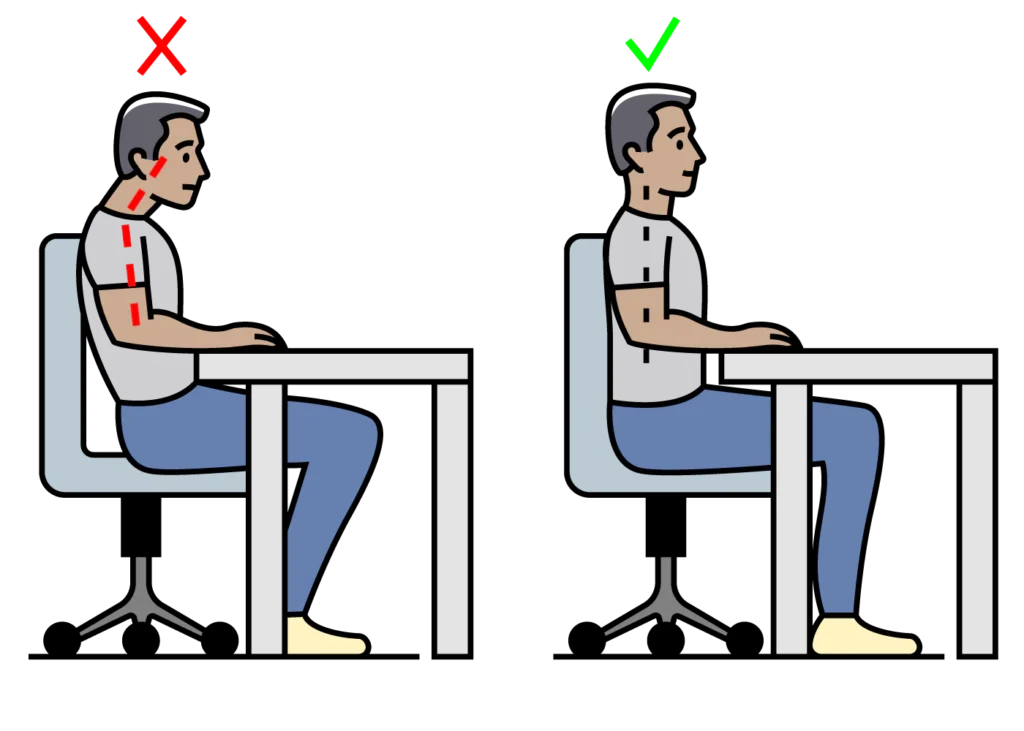
Daily Tips:
- Avoid looking down for long
- Use proper pillows
- Apply heat or ice
- Stay active
Exercises:
- Chin tucks
- Neck rotations
- Shoulder rolls
Consistency matters more than intensity.
Real-Life Example
A working professional spends 8–10 hours daily on a laptop. Starts with mild neck stiffness but, ignores it and the pain spreads to arm.
After consulting cervical radiculopathy specialists at Ct Advanced Spine, targeted therapy helps relieve symptoms without surgery.
Key takeaway? Early treatment is equal to faster recovery.
When Should You See a Specialist?
Don’t delay if:
- Pain lasts more than 1–2 weeks
- Symptoms worsen
- Tingling or numbness increases
- Weakness develops
Early diagnosis saves months of recovery.
Prevention: Simple Habits That Work
- Fix Your Posture- Keep screen at eye level.
- Take Breaks- Every 30–40 minutes.
- Strengthen Muscles- Neck + core exercises.
- Sleep Smart- Use supportive pillows.
- Avoid Long Screen Time- Especially on phones.
Why Choose CT Advanced Spine for Cervical Radiculopathy Care?
Getting the right care from the right team from the start makes a measurable difference — in how quickly you recover, how much unnecessary treatment you avoid, and whether you ever need surgery at all.
At CT Advanced Spine, the approach to cervical radiculopathy is built on three pillars: precision diagnosis, individualized cervical radiculopathy treatment planning, and genuine partnership with each patient. Dr. Ashish Upadhyay, MD, MS and the team bring deep expertise across the entire spectrum of care — from conservative management and advanced cervical radiculopathy therapies to minimally invasive surgical techniques that get patients back to living their lives faster.
If you are beginning to develop signs and symptoms of a pinched nerve, or you have had a long-term condition called cervical radiculopathy, the specialists at CT Advanced Spine will provide a truthful diagnosis and treatment plan without unnecessary procedures or guessing games.
For more information on how CT Advanced Spine can help you treat cervical radiculopathy.
FAQs
Que. What are pinched nerve symptoms in the neck?
Ans: Pain, tingling, numbness, and weakness that may radiate to shoulder and arms.
Que. How do I know if I have cervical radiculopathy?
Ans: If pain travels from neck to arm with tingling or numbness, it’s likely cervical radiculopathy.
Que. What is the fastest way to relieve a pinched nerve in neck?
Ans: Rest, posture correction, therapy, and targeted treatment.
Que. Can a pinched nerve heal on its own?
Ans: Mild cases can. Severe cases need treatment.
Que. How long does recovery take?
Ans: 1. Mild: Days to weeks
2. Moderate: 4–6 weeks
3. Severe: Months
Conclusion
A pinched nerve in neck isn’t just a small issue — it’s your body asking you to pay attention.
A pinched nerve in the neck is painful, disruptive, and for many people, genuinely frightening. But it is also one of the most treatable spinal conditions in medicine — with a well-defined path from accurate diagnosis through effective cervical radiculopathy treatment to full recovery.
Don’t Ignore it, and it gets worse…Address it early, and recovery becomes much easier.
Ready to Fix the Root Cause?
If you’re tired of temporary relief and want a long-term solution, it’s time to consult experts.
Ct Advanced Spine offers:
- Advanced diagnostics
- Non-surgical spine treatments
- Personalized recovery plans
👉 Book your consultation today and get back to living pain-free.